
Decoding HVAC Tonnage: How to Find Your AC Size Like a Pro

Ever been chatting with an HVAC technician and heard them throw around terms like “3-ton unit” or “48,000 BTUs”? If you nodded along while secretly wondering what any of that meant, you’re definitely not alone. Understanding your AC’s tonnage is actually pretty useful knowledge, whether you’re getting quotes for a new system, troubleshooting issues, or just want to sound impressive at your next neighborhood cookout.
Let’s break down everything you need to know about HVAC tonnage and, more importantly, how to figure out exactly what size system is sitting in your backyard right now.
Wait, Tons? Like… Weight?
Here’s the thing that trips up most people: when we talk about AC tonnage, we’re not talking about how much your equipment weighs. Your 3-ton air conditioner doesn’t actually weigh 6,000 pounds (thank goodness, or your concrete pad would be in serious trouble).
Tonnage refers to cooling capacity, specifically, how much heat your system can remove from your home in one hour.
The term actually comes from the old days of ice delivery. One “ton” of cooling equals 12,000 BTUs (British Thermal Units) per hour, which is roughly the amount of cooling power you’d get from melting one ton of ice over 24 hours. Pretty cool history lesson, right?
So when someone says they have a 3-ton AC unit, they’re saying their system can remove 36,000 BTUs of heat per hour (3 × 12,000 = 36,000).

Why Does Knowing Your Tonnage Matter?
You might be thinking, “Okay, interesting trivia, but why should I care?” Fair question. Here’s why knowing your system’s size matters:
Getting accurate repair quotes: When you call for service, knowing your tonnage helps technicians come prepared with the right parts and give you more accurate estimates.
Comparing replacement options: If you’re shopping for a new system, understanding your current tonnage gives you a baseline for comparison. You’ll know if a contractor is recommending the same size or suggesting something different, and you can ask why.
Understanding your energy bills: A system that’s too big or too small for your home won’t run efficiently. Knowing what you have helps you identify potential problems.
DIY filter shopping: Some filter sizes correspond to system tonnage, so this info can come in handy at the hardware store.
How to Find Your AC Tonnage: The Model Number Method
Alright, here’s where we get to the good stuff. The easiest way to find your tonnage is hiding in plain sight on your outdoor condenser unit.
Step 1: Head outside to your condenser
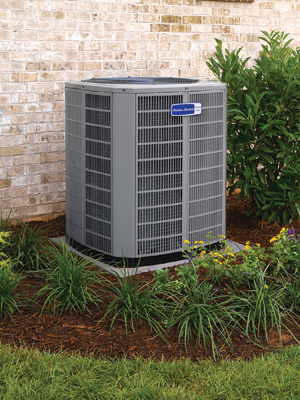
That’s the big box with the fan that sits outside your home. You’ll find a metal plate or sticker on the unit, usually on the side, with all sorts of technical information.
Step 2: Find the model number
Look for something labeled “Model” or “M/N.” It’ll be a string of letters and numbers that looks like alphabet soup at first glance.
Step 3: Look for the magic numbers
Here’s the secret: somewhere in that model number, usually about halfway through, you’ll find a two-digit number that tells you the BTU capacity. In almost all cases, this number indicates your tonnage. For a better understanding of the system components, learn more here.
The Tonnage Decoder Ring
Here’s your cheat sheet for translating those model number digits into tonnage:
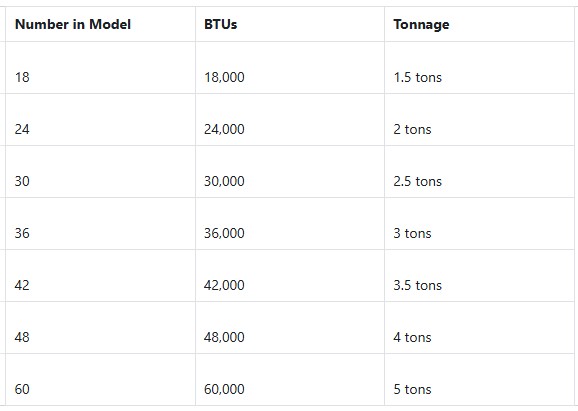
Let’s try an example: Say your model number is something like “GSX140361NA.” See that “36” in there? That tells you it’s a 36,000 BTU unit, which means you’ve got a 3-ton system. Easy!
Another example: If your model number contains “24,” you’re looking at a 2-ton unit (24,000 BTUs ÷ 12,000 = 2 tons).
What If You Can’t Find the Number?
Sometimes those model number labels get weathered, faded, or just don’t follow the standard format. No worries, you’ve got options:
Check your paperwork: Dig through your files for the original invoice, warranty documents, or maintenance records. The tonnage is often listed right there.
Look up your specific brand: Different manufacturers sometimes use slightly different coding systems. The folks at Building Center have put together a handy resource where you can look up tonnage information by brand.
Give us a call: If you’re still scratching your head, that’s literally what we’re here for. The team at Accu-Temp can help you figure out your system’s specs, no judgment if those numbers look like hieroglyphics to you.
A Quick Note on Sizing: Bigger Isn’t Always Better
While we’re on the topic, let’s bust a common myth: a bigger AC doesn’t necessarily mean better cooling. In fact, an oversized system can actually cause more problems than it solves.
Too big: Your AC will cool the house quickly, then shut off before it has a chance to properly dehumidify the air. The result? That clammy, uncomfortable feeling even when the temperature seems right. Plus, all that starting and stopping (called short cycling) puts extra wear on components.
Too small: Your system runs constantly, struggling to keep up with demand. Your energy bills climb, your equipment wears out faster, and you’re still not comfortable.
Just right: A properly sized system runs in longer, more efficient cycles that maintain consistent temperature and humidity levels throughout your home.
If you’re curious about whether your current system is the right fit for your home, check out our post on whether a bigger AC actually cools better.
How Pros Calculate the Right Size
When HVAC professionals size a system for your home, they don’t just look at square footage (though that’s a starting point). They consider:
- Square footage: The basic foundation for sizing calculations
- Ceiling height: Higher ceilings mean more air volume to cool
- Insulation quality: Better insulation means less tonnage needed
- Window size and orientation: South-facing windows let in more heat
- Local climate: Here in Central Texas, we definitely factor in those brutal summer temps
- Number of occupants: More people = more body heat
As a very rough rule of thumb, most homes need about 1 ton of cooling for every 500-600 square feet. But that’s just a ballpark, the actual calculation is more nuanced.
Quick Square Footage Reference
If you’re just curious about whether your system seems reasonable for your home size, here’s a general guideline for standard residential cooling:
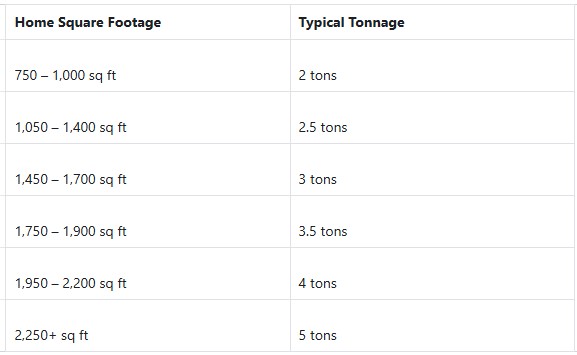
Keep in mind this is just a starting point. Older homes, homes with lots of windows, or homes with poor insulation might need more capacity. If you’re in an older home, sizing gets even more nuanced.
Time for a System Checkup?
Now that you know how to decode your system’s tonnage, you’re armed with useful information for conversations with HVAC pros, understanding your home’s cooling needs, and making informed decisions about maintenance or replacement.
If you’ve discovered your system seems way off from what your home needs, or if you just want a professional opinion, the Accu-Temp team is always happy to take a look. We can verify your current system’s capacity, assess whether it’s the right fit for your space, and help you explore options if it’s time for an upgrade.
And hey, if you found that model number but the digits still aren’t making sense, don’t hesitate to reach out. We speak fluent HVAC: and we’re happy to translate.