
Why Does My Thermostat Say “No Power”? (And What You Can Safely Do About It)
A thermostat displaying “No Power,” “No AC Power,” or a similar message can be confusing: especially when your home suddenly stops heating or cooling. You may also see a blank screen, a low battery warning, or “No Wi-Fi.”
The good news is that the thermostat itself may not be the problem. In many cases, it is reporting that it has lost power from the furnace or air handler. That power interruption can happen for several reasons, including a tripped breaker, a clogged condensate drain, a blown fuse, or damaged thermostat wiring.
Some basic checks are safe for homeowners. However, most electrical and HVAC control issues should be diagnosed and repaired by a qualified professional.
How Does a Thermostat Get Power?
Most modern thermostats do not create their own power. A typical wired thermostat receives approximately 24 volts of low-voltage power from a transformer inside the furnace or air handler.
That power travels through control wires between the indoor HVAC equipment and the thermostat. Common thermostat terminals include:
- R: Power from the transformer
- C: Common wire that completes the electrical circuit
- Y: Air conditioning signal
- W: Heating signal
- G: Indoor blower signal
Many smart thermostats need a C-wire to maintain a steady power supply for the display, Wi-Fi, sensors, and other features. Some thermostats use batteries as the primary power source or as a backup, while others rely almost entirely on the HVAC system’s low-voltage power.
If power is interrupted at the furnace or air handler, the thermostat may lose its display and communication with the equipment, even if the thermostat wiring looks fine at the wall.
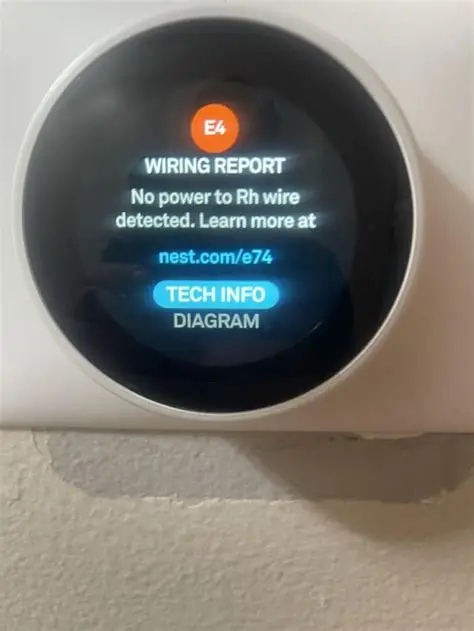

Common Reasons Your Thermostat Says “No Power”
1. The Furnace or Air Handler Lost Power
A thermostat can show a no-power message when the indoor HVAC unit is not receiving electricity. Possible causes include:
- A tripped circuit breaker
- A failed breaker
- A wiring problem at the electrical panel
- An indoor equipment power switch that was turned off
- An access panel that is not seated correctly
- A tripped safety switch
- An electrical fault inside the system
The outdoor condenser may still appear to have power, but your thermostat and indoor blower depend on the furnace or air handler. If the indoor unit loses power, the thermostat may not be able to communicate with the system.
You can safely check whether the HVAC breaker is visibly tripped. If it is, move it firmly to OFF first and then back to ON once. If it trips again, leave it off and call a licensed electrician. A breaker that repeatedly trips is warning you about a possible electrical or equipment problem.
You can also check the service switch near the furnace or air handler. It often looks like a regular light switch. Make sure it is in the ON position, but do not remove equipment panels or work around wiring.
2. A Clogged Condensate Drain Tripped a Float Switch
In Central Texas, a clogged condensate drain is a particularly sneaky cause of a no-power thermostat message.
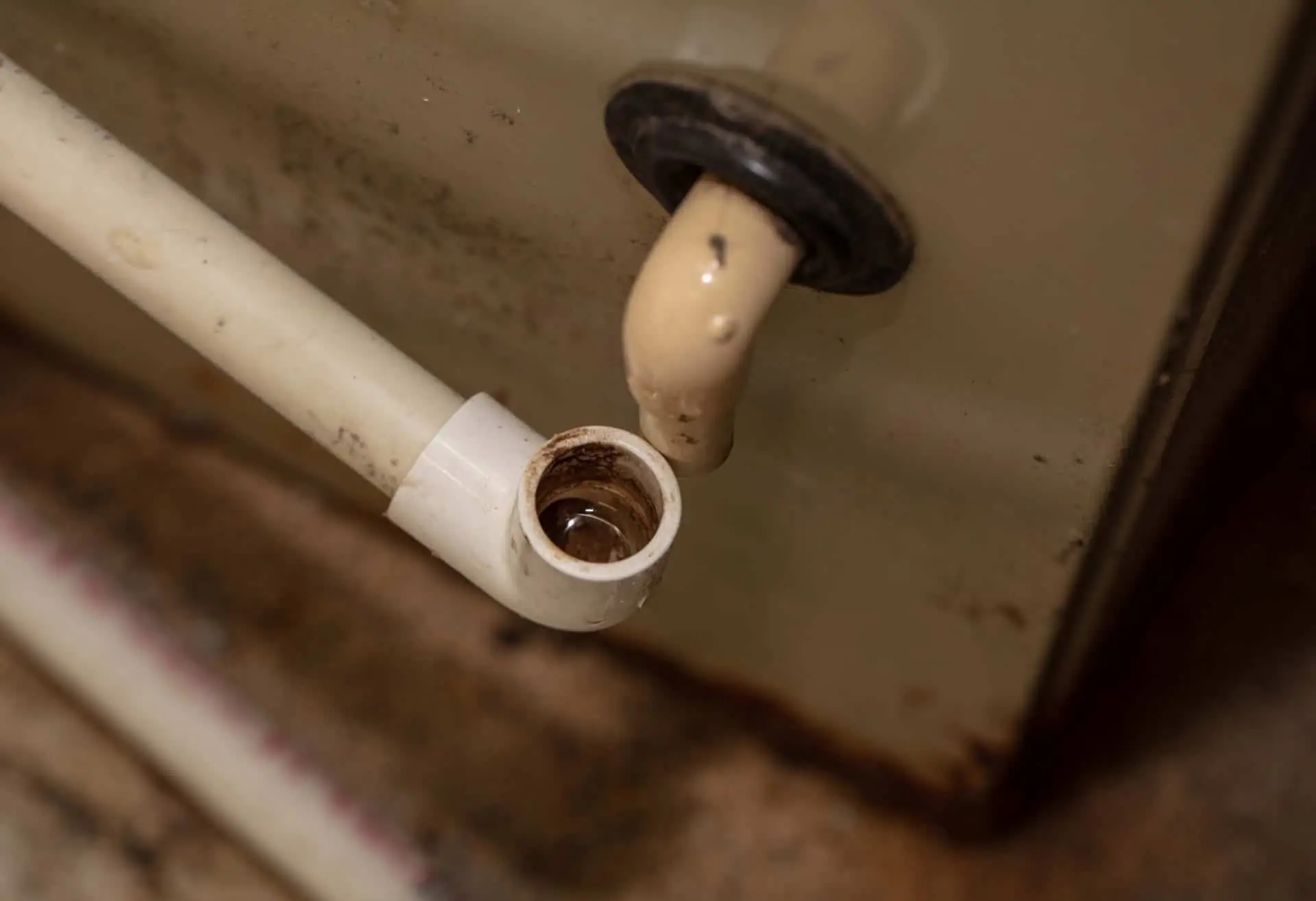
Your air conditioner removes moisture from indoor air as it operates. That water collects in a drain pan and flows away through a condensate drain line. Over time, the line can become clogged with algae, dirt, dust, or other buildup.
When water backs up, a float switch may rise and interrupt the low-voltage circuit. This is designed to shut down the HVAC system before overflowing water damages your ceiling, walls, flooring, or equipment.
Because the float switch can interrupt the 24-volt control circuit, the thermostat may:
- Display “No Power”
- Go blank
- Show “Low Battery”
- Lose Wi-Fi
- Stop responding to temperature changes
- Leave the furnace or air handler unable to run
In other words, the thermostat message may actually indicate that the system’s safety protection is doing its job.
You can look around the indoor unit for obvious standing water or signs of an overflowing drain pan. Do not bypass the float switch, disconnect safety wiring, or continue resetting the system if water is accumulating. Clearing a drain line may sound simple, but accessing the drain, testing the float switch, and finding the reason for recurring backups are usually best left to a professional.
Accu-Temp’s routine maintenance service includes checking and flushing the drain line to help prevent this type of interruption.
3. A Blown Low-Voltage Fuse
Most furnaces and air handlers have a small low-voltage fuse on the control board. It is often rated around 3 to 5 amps and is intended to protect the transformer and other components if there is a short in the control circuit.
A blown fuse can result from:
- Damaged thermostat wiring
- A short between control wires
- Incorrect thermostat installation
- A failed component
- Wiring that was pinched during service
- A problem with an accessory connected to the system
Replacing the fuse without finding the reason it failed is not a complete repair. The replacement may blow immediately, or the underlying problem could damage another component.
Because diagnosing a blown fuse involves electrical testing and access to the furnace or air handler control board, this is professional-level work. Homeowners should not remove panels or replace HVAC fuses unless specifically instructed and qualified to do so.
4. Mis-Wired Thermostat
If the problem began after a new thermostat was installed, the thermostat may be mis-wired or incompatible with the system.
A wire can be connected to the wrong terminal, not fully secured, or accidentally pulled loose. Smart thermostats can also require a C-wire, an approved power adapter, or a specific configuration for heat pumps, dual-fuel systems, or other equipment.
Incorrect wiring can cause more than a no-power message. It may also lead to:
- Heating or cooling that will not start
- The blower running at the wrong time
- Short cycling
- A fuse blowing
- Damage to the thermostat or control board
Avoid moving wires around based only on their colors. HVAC wiring is not always installed consistently, and the terminal designation matters more than the color. If a thermostat was recently replaced or removed, have a technician verify the wiring and system configuration.
Learn more about smart thermostat setup and service from Accu-Temp.
5. Damaged, Loose, or Corroded Control Wiring
The low-voltage wires connecting the thermostat to the indoor equipment can be damaged in several ways. Rodents may chew through wiring in an attic or wall cavity. Moisture can cause corrosion. A loose connection can develop at the thermostat, furnace, air handler, or an intermediate splice.
Construction, remodeling, insulation work, and previous HVAC repairs can also disturb control wiring.
A damaged wire, especially one serving the R or C terminal, can prevent the thermostat from receiving power. Finding the actual break may require testing the circuit at multiple points. That is not something you need to troubleshoot by opening walls or handling equipment wiring.
What You Can Safely Check Yourself
Before scheduling service, homeowners can usually perform these limited checks:
- Replace the thermostat batteries. Use the type listed inside the thermostat or in the manufacturer’s instructions. If the display returns but the system still says “No Power,” the HVAC system may have lost its 24-volt supply.
- Check the HVAC breaker. If it is tripped, reset it once. Do not repeatedly reset a breaker that trips again.
- Verify the indoor equipment switch is on. This is commonly located near the furnace or air handler.
- Look for obvious water around the indoor unit. Standing water suggests a condensate drainage or safety-switch issue.
- Make sure the equipment access door is fully closed. Many systems have a door safety switch that prevents operation when the panel is not properly installed.
Stop if you notice a burning smell, melted insulation, exposed wiring, water near electrical components, or repeated breaker trips.
What About a “No Wi-Fi” Message?
A “No Wi-Fi” message does not always mean the thermostat has lost HVAC power. It may indicate:
- Your home internet is down
- The router needs to be restarted
- The thermostat was disconnected from the network
- The thermostat’s software or app needs attention
- The thermostat lost power and temporarily dropped its Wi-Fi connection
However, if “No Wi-Fi” appears at the same time as a blank screen, “No Power,” or “Low Battery,” the thermostat may have lost its 24-volt supply. In that situation, checking the home network first probably will not solve the main problem.
When to Call an HVAC Professional
Contact a qualified HVAC technician if fresh batteries, a breaker check, and a power-switch check do not restore normal operation. Professional diagnosis may include testing:
- The transformer
- The control-board fuse
- The condensate float switch
- The thermostat’s R and C voltage
- The control wiring
- The furnace or air handler control board
- The equipment’s safety circuits
At Accu-Temp Air Conditioning & Heating, our goal is to provide a factual diagnosis and clear options: not pressure you into an unnecessary repair or replacement. We service central HVAC systems, ductless systems, furnaces, air handlers, and smart thermostats throughout Austin and surrounding Central Texas communities.
If your thermostat says “No Power,” contact Accu-Temp or call (512) 636-9555. We will help you understand what is happening and make an informed decision about the next step.
Final Takeaway
A thermostat’s “No Power” message does not automatically mean the thermostat has failed. The real issue may be a lost power supply to the furnace or air handler, a tripped condensate float switch, a clogged drain line, a blown low-voltage fuse, mis-wiring, or damaged control wiring.
The safest homeowner checks are limited: replace batteries, verify the breaker and indoor power switch, and look for obvious water. For everything beyond that, professional diagnosis is the safest and most reliable path. In many cases, the message is your HVAC system protecting itself: and your home( from further damage.)