
What We Find In Austin AC Units: Ants, Lizards, Snakes, and Rodents vs. Your HVAC System
Austin’s heat brings out more than just homeowners looking for a cool room. Ants, lizards, snakes, mice, rats, raccoons, roaches, spiders, and wasps may also see your HVAC system as a comfortable place to shelter, or an easy source of food and nesting material.
Most pest-related HVAC problems are not a horror story. They are usually small animals taking advantage of a warm control compartment, a quiet attic, or an opening in a duct. But the damage they leave behind can create expensive-looking symptoms, from a system that will not start to a breaker that keeps tripping.
The good news is that the repair is not always a major replacement. Sometimes the answer is a fuse and a repaired wire. Sometimes the real fix is calling a pest-control or wildlife professional so the same problem does not happen again.
Why HVAC equipment attracts pests
HVAC systems offer several things pests naturally look for:
- Warm motors and electrical compartments during cooler weather
- Shade and shelter inside outdoor condenser cabinets during summer
- Condensate moisture around drain lines and equipment
- Wiring insulation, duct liner, and attic insulation that are easy to chew or pull apart
- Quiet attics and crawlspaces that people rarely visit
- Small openings around line sets, duct connections, vents, and equipment panels
Outdoor units can also attract insects indirectly. Ants may be farming aphids on plants near the condenser, while roaches and spiders may find the service panel a convenient hiding spot. Wasps and mud daubers can build nests in cabinet openings or fan grilles, restricting airflow and making service more difficult.
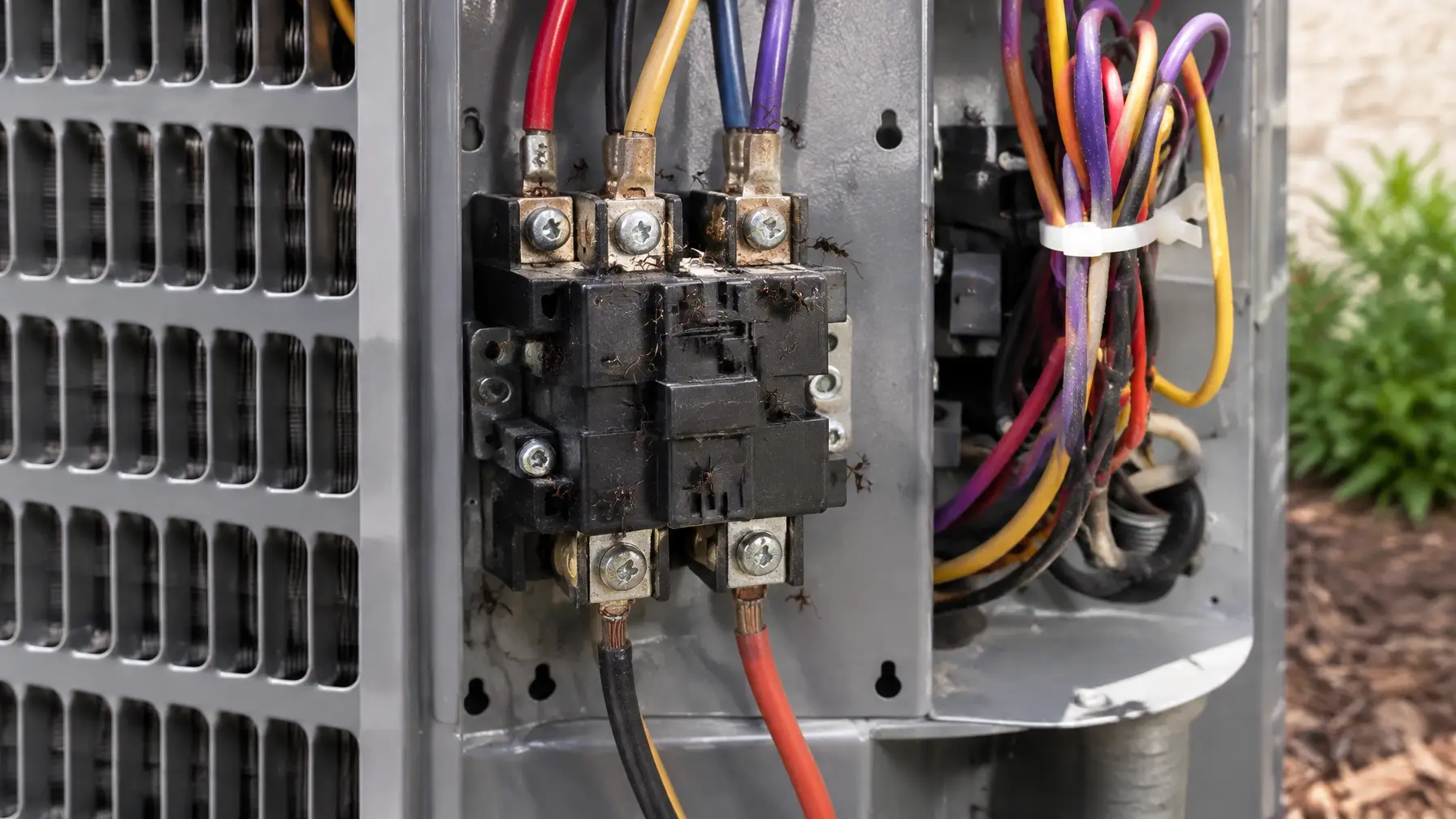
Ants in the contactor: a small pest with a big electrical impact
The contactor is an electrical switch inside the outdoor condenser. It turns the compressor and condenser fan on when your system receives a cooling signal.
Ants are drawn to the protected, warm space around the contactor. A nest, a pile of dead ants, or loose insect debris can bridge the contact points. That can cause the contactor to:
- Stay engaged when it should be off
- Prevent the condenser from starting
- Make the outdoor unit run intermittently
- Create arcing, corrosion, or electrical damage
From the homeowner’s perspective, this may look like a thermostat problem or a failed compressor. In reality, an insect nest or debris inside the electrical compartment may be the cause.
Do not open the electrical panel or try to brush ants away while the equipment is energized. A trained HVAC technician can inspect the contactor, disconnect power safely, clean the compartment, and determine whether the contactor or wiring needs repair.
Lizards and control board problems
Small lizards often seek the same thing people do in Texas: a cool, shaded place during the hottest part of the day. The control compartment inside an outdoor unit can provide shelter from the sun and protection from predators.
A lizard that gets onto the control board can bridge low-voltage terminals or contact exposed components. The result may include a blown low-voltage fuse, a shorted control circuit, or a damaged board.
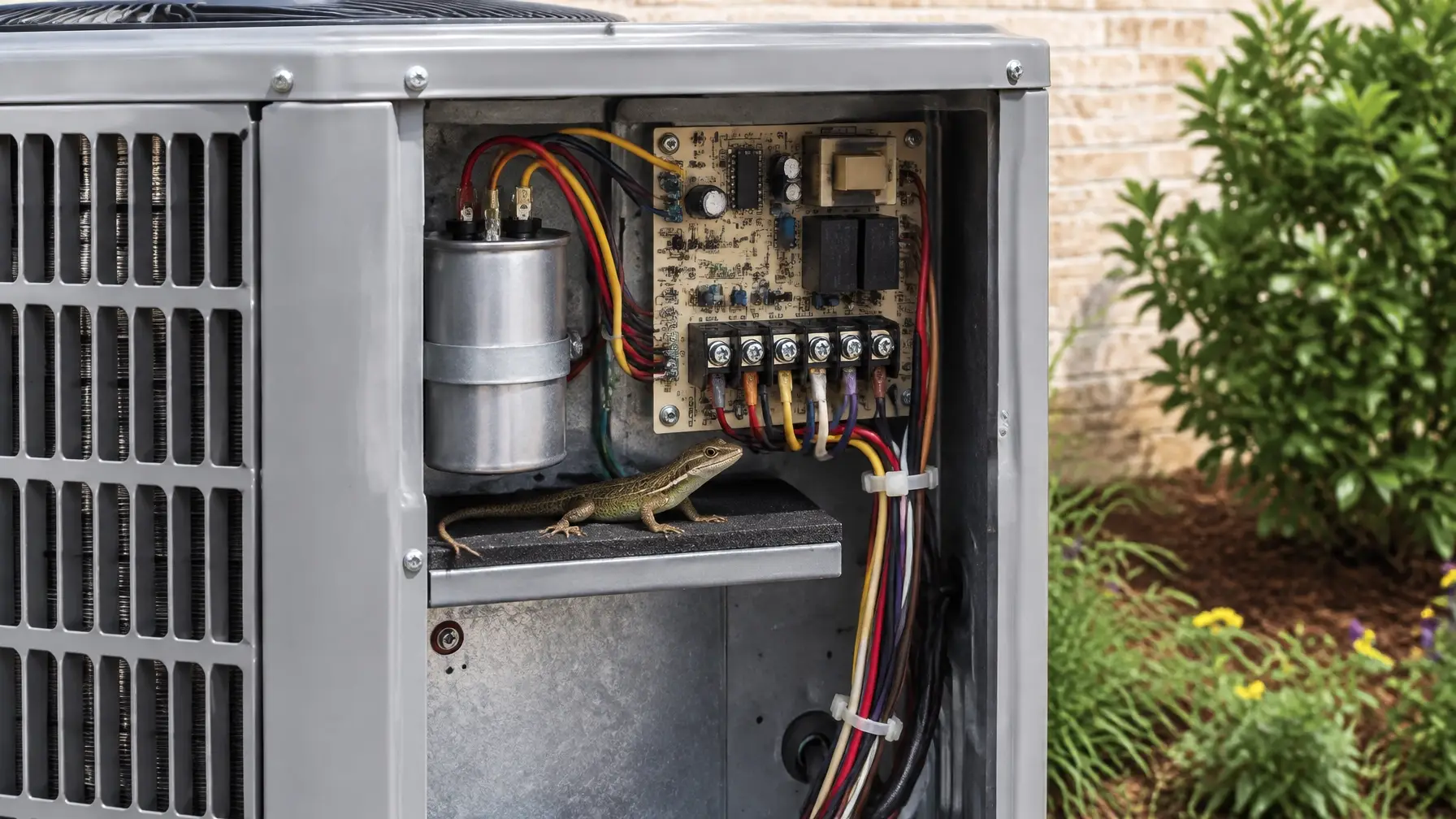
A blown fuse is not always the root problem. Replacing the fuse without finding the short can simply cause it to blow again. If your outdoor unit is not responding when the thermostat is calling for cooling, or a low-voltage fuse repeatedly fails, professional diagnosis is the safest choice.
Snakes and other animals around the condenser fan
Snakes and other small animals can get into an outdoor condenser through cabinet openings. They may coil near the fan motor because the space is shaded and protected.
If an animal fouls or jams the condenser fan blade, it can damage:
- The fan blade
- The fan motor
- Motor mounts
- Wiring and other nearby components
A jammed fan may produce loud noises, humming, vibration, or a system that shuts down on a hot day. Continuing to run the equipment can turn a relatively contained problem into a more extensive repair.
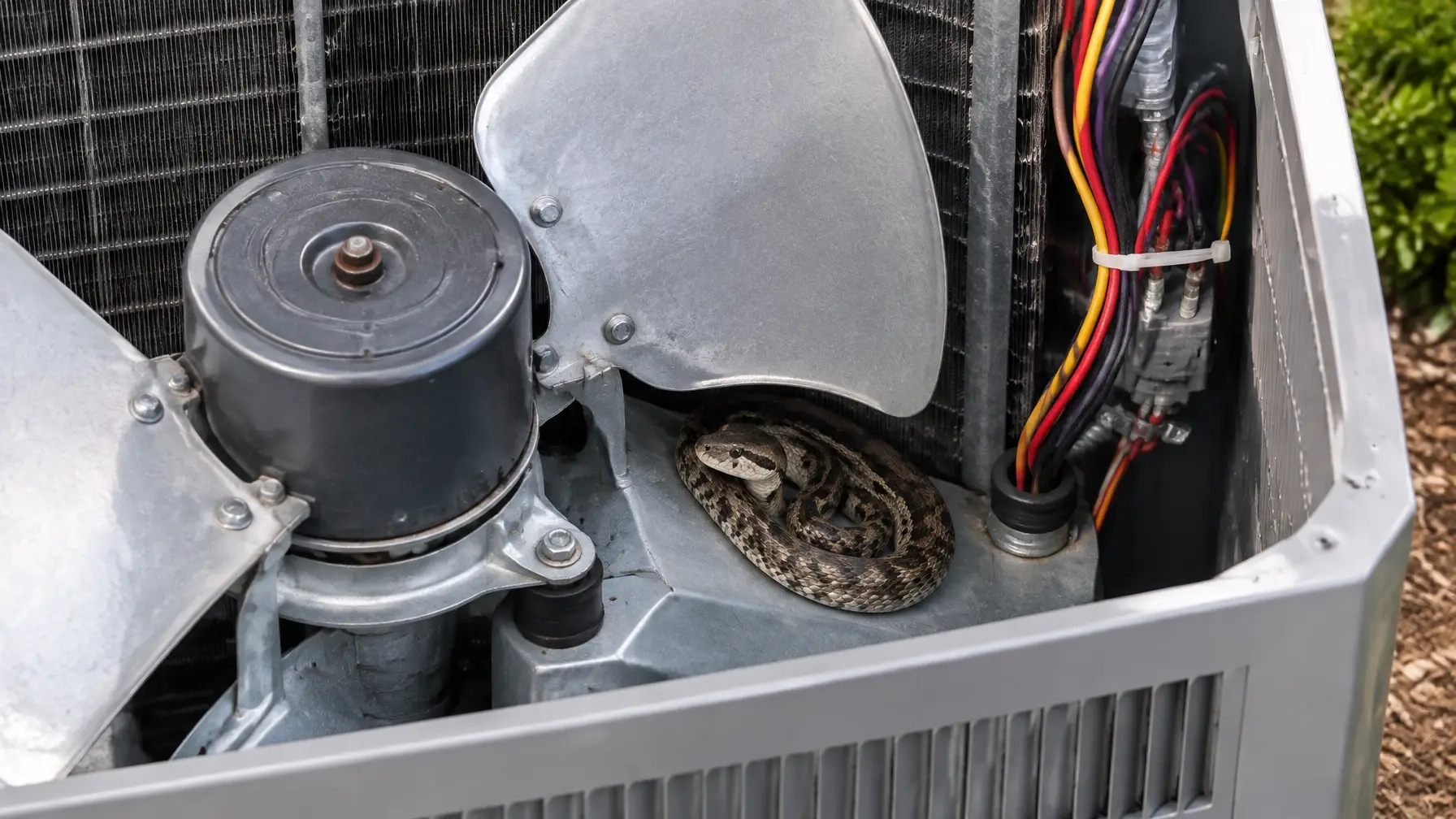
If you see a snake, raccoon, or other wildlife in or around HVAC equipment, do not reach into the cabinet and do not try to remove it. Wildlife handling is not a DIY job. Contact a licensed wildlife or pest professional, then have an HVAC technician inspect the equipment for damage after the animal is safely addressed.
Rodents in the attic: chewed wires, damaged ducts, and contamination
Mice, rats, and raccoons can cause some of the most widespread HVAC damage. Rodents may chew insulation from electrical wiring, including low-voltage control wires that connect the thermostat, air handler, and outdoor unit.
Chewed wires can result in:
- Short circuits
- Blown low-voltage fuses
- Mysterious breaker trips
- Failed control boards
- Intermittent operation
- A system that starts and stops unexpectedly
Rodents may also tear open flex duct in the attic, pull apart insulation, or build nests near an air handler. An opening in a duct can allow conditioned air to escape into an attic that may reach roughly 140°F in the summer. That means less cooled air reaches the rooms you are paying to cool, and the system may run longer while your energy bills rise.
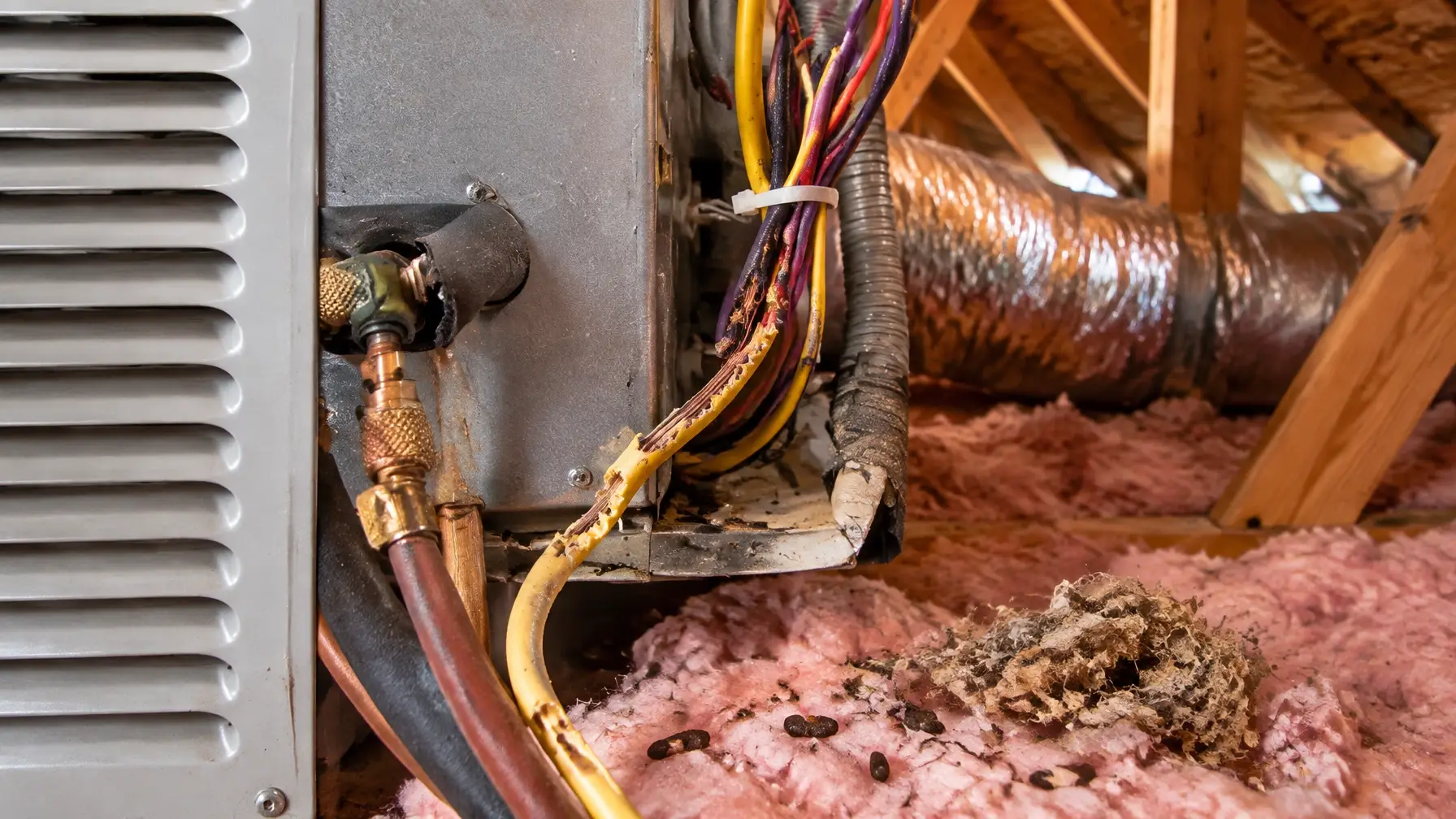
Droppings, urine, nesting material, and other debris inside equipment or ductwork are also an indoor air quality concern, especially for people with allergies or asthma. If you suspect rodent contamination, do not handle droppings or nesting material with bare hands. Avoid sweeping or vacuuming it in a way that could send particles into the air. A qualified pest-control or remediation provider can advise on safe cleanup.
What pest damage can look like as an HVAC problem
Pest activity may not be obvious at first. You might only notice that:
- The breaker trips repeatedly
- A low-voltage fuse keeps blowing
- The AC stops working on the hottest day of the year
- The control board has failed
- Ice forms on the indoor coil
- Your energy bills are higher than usual
- The vents smell musty or like animals
- The system short cycles
- The outdoor unit hums, rattles, or vibrates
- Airflow is weak in some rooms
Ice on the coil, for example, can be caused by restricted airflow from a dirty filter or blocked duct. But torn ductwork, nesting material, or debris in the blower compartment can also affect airflow. A professional diagnosis helps separate a simple maintenance issue from electrical or duct damage.
Homeowner-safe prevention steps
There are several things you can safely do to make your HVAC system less inviting:
- Change your air filter on schedule. Inspect it when you replace it. A heavily loaded filter can restrict airflow and may show signs of dust or debris.
- Look at the outdoor unit periodically. Keep leaves, grass, and debris away from the cabinet and pad.
- Trim bushes and plants back from the condenser. This reduces hiding places and helps discourage insect activity.
- Keep mulch, trash, and stored materials away from the equipment.
- Secure trash cans and pet food. These can attract rodents and raccoons.
- Seal obvious exterior openings around the attic, crawlspace, line-set penetrations, and equipment areas, without blocking required vents or combustion openings.
- Check the attic occasionally from a safe location. Look for torn ductwork, chewed wiring, droppings, or nesting material. Do not crawl into unsafe areas or disturb animals.
- Call a pest-control provider if you see recurring ants, rodents, wasps, or other pest activity.
Do not spray pesticides inside ducts or directly onto electrical components. Chemicals applied near return-air openings can potentially be circulated through the home.
What a professional inspection may include
When pests have affected an HVAC system, a technician may inspect and service:
- The blower compartment and air handler
- The outdoor contactor and control board
- Low-voltage fuses and control wiring
- Fan blades, fan motors, and motor mounts
- Chewed wiring runs
- Torn or disconnected flex duct
- Duct insulation and connections
- Evidence of debris inside the equipment
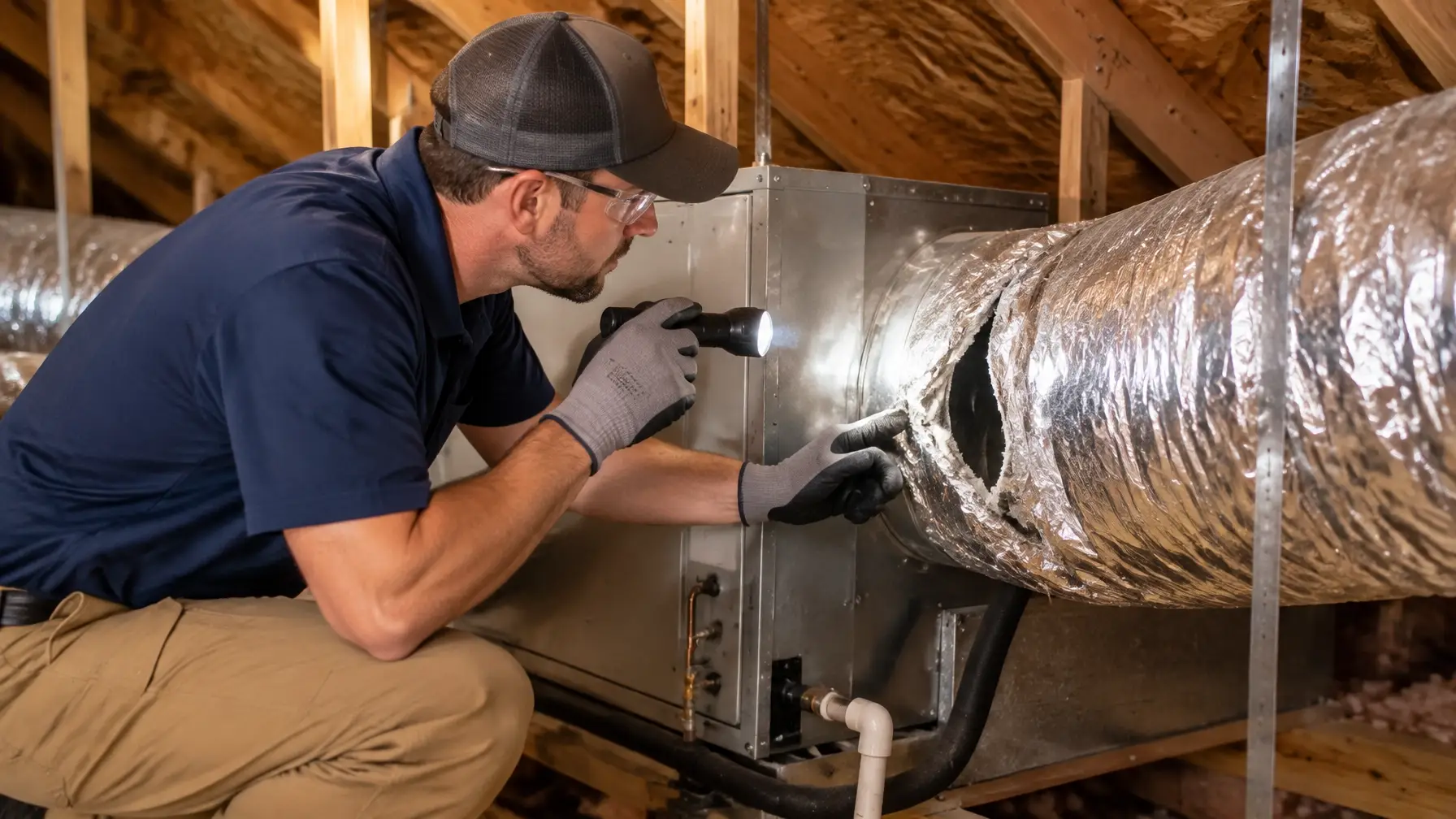

The repair may be straightforward. A chewed low-voltage wire could be a short, inexpensive repair rather than a reason to replace the entire system. A contactor may need cleaning or replacement. A section of flex duct may be repairable or replaceable.
At Accu-Temp Air Conditioning & Heating, we believe in explaining what we find before recommending work. You can learn more about our HVAC repair and maintenance services or contact our team if your system is showing signs of pest-related damage.
The real solution may be outside the HVAC system
HVAC repairs can address the damage, but they may not stop the cause. If ants keep returning, the nearby nest or vegetation may need attention. If rodents keep entering the attic, the entry point must be sealed and the infestation handled. If a raccoon or snake is using the equipment as shelter, a licensed wildlife professional should manage the removal.
A pest in the condenser does not automatically mean you need a new air conditioner. And replacing a control board without addressing the pest pressure may only lead to another failure.
The best approach is simple: keep the area clear, watch for warning signs, avoid unsafe DIY repairs, and bring in the right professional when pests and HVAC equipment cross paths.