That Burning Smell When You First Turn On the Heat (And When It’s Not Normal)
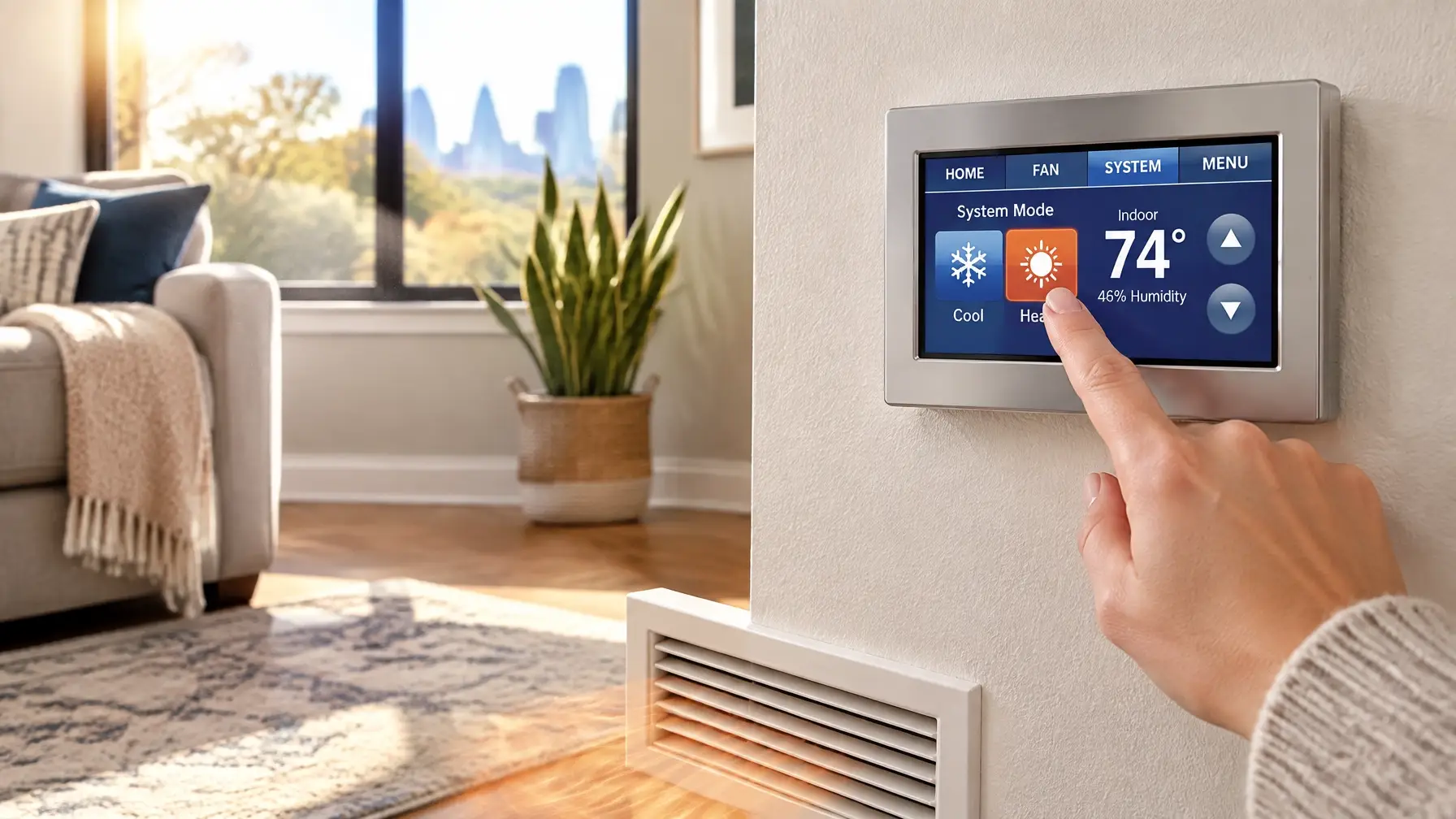
It is Fall in Central Texas. The mornings are finally getting cooler, so you switch the thermostat from cooling to heating for the first time in months, and suddenly the house smells like something is burning.
Usually, that first dusty odor is not a sign that your furnace is failing. After sitting idle through a long Austin summer, a heating system can collect dust, pollen, lint, and other small particles. When the heat exchanger, burners, or electric heat strips warm up again, that buildup can burn off.
Still, not every burning smell is harmless. The type of odor, how long it lasts, and whether it fades or gets stronger can help you decide whether to keep monitoring the system or turn it off and call a professional.
The normal smell: dusty, warm, and temporary
A light smell similar to warm dust, dry paper, or lint is common when heating equipment starts after months of cooling-only operation.
On a gas furnace, dust may settle around the burners, heat exchanger surfaces, and nearby components. On an electric air handler or heat pump, dust and lint can collect on the electric heat strips. When these surfaces heat up, the particles burn off.
A normal first-startup smell typically:
- Is mild and dusty rather than sharp or chemical
- Appears during the first heating cycle
- Is strongest at the beginning
- Starts fading within 10 to 30 minutes
- Does not produce visible smoke
- Does not return strongly every time the system runs
Some systems may take a little longer to clear, especially if they have been idle for several months or the home has a heavy dust and pollen load. The important detail is that the odor should steadily diminish, not become stronger.
Manufacturers such as Carrier and Trane offer similar guidance: a brief dusty smell can be expected at the beginning of the heating season, but persistent or unusual odors deserve attention.

How to air out the house
If the odor is mild and clearly dusty, you can usually let the system complete a heating cycle while ventilating the home.
Try these simple steps:
- Open a few windows or exterior doors for several minutes.
- Run bathroom or kitchen exhaust fans if they vent outdoors.
- Make sure supply registers and return grilles are open and unobstructed.
- Let the system run continuously through the first cycle rather than turning it on and off repeatedly.
- Note the time the smell begins and whether it fades.
You can also replace the air filter before the first substantial heating cycle. A dirty or overloaded filter can restrict airflow, increase strain on the blower, and contribute to odors. Use the correct filter size and rating for your system.
Do not spray air freshener into vents or try to mask the smell. That can make it harder to identify a developing equipment problem.
A heat pump may produce the same smell
If your home has a heat pump, the first heating odor may come from the auxiliary or emergency heat, not necessarily from a gas furnace.
Heat pumps move heat from outside air into the home. When outdoor temperatures drop or the thermostat calls for additional heat, electric resistance heat strips may switch on. Dust and lint that settled on those strips during the cooling season can create the same brief, dusty burn-off smell.
That smell alone does not mean the heat pump has failed. However, electric heat strips use substantial electrical current. A sharp electrical odor, melting-plastic smell, smoke, or repeated burning odor is not normal and should be treated seriously.
Learn more about how heat pumps operate in the Accu-Temp heat pump guide.
Smell-by-smell: what may be normal and what is not
Dusty or dry paper smell
This is the smell most homeowners notice during the first heating cycle. If it is mild, temporary, and fading, it is usually dust and lint burning off warm equipment.
You can ventilate the home, check the filter, and monitor the system. If it remains strong after roughly 30 minutes, returns during every cycle, or gets worse, turn the heat off and schedule a professional inspection.
Sharp electrical or ozone smell
An electrical odor may smell acrid, metallic, or similar to overheated wiring or electronics. Possible causes include a failing blower motor, loose electrical connection, overheating wiring, or an electric heat-strip problem.
This is not normal startup burn-off.
Turn the system off at the thermostat and do not continue running it to see whether the smell disappears. Avoid opening equipment panels or touching wiring. Electrical diagnosis and repair should be handled by a qualified HVAC professional.
Burning plastic or rubber smell
A melting-plastic or hot-rubber odor can indicate overheated wire insulation, a damaged component, or material contacting a hot surface.
Turn the system off immediately. If you see smoke, sparks, or flames, leave the area and call 911 when safe to do so. Do not restart the system.
Oily or hot-oil smell
An oily odor is not the same as normal dusty burn-off. It could point to an oil-furnace issue, residue near a burner, or another mechanical problem. Oil-burning systems are less common than gas and electric systems in the Austin area, but homeowners with them should treat a strong or persistent oily smell as a reason to shut down the equipment and call for service.
Do not attempt to clean burner components or add fuel yourself.
Musty, damp, or moldy smell
A musty odor usually points to moisture, a dirty filter, microbial growth, or buildup around ductwork or indoor components, not dust burning off the heat source.
You can safely check and replace the filter and look for obvious moisture around accessible areas. If the smell continues, a professional may need to inspect the coil, drain pan, ductwork, or air handler.
A musty smell is not usually an immediate fire warning, but it can affect indoor air quality and should not be ignored.
Rotten-egg or sulfur smell
A rotten-egg odor may indicate a natural gas leak. Natural gas is odorized to make leaks easier to detect.
Do not operate light switches, appliances, thermostats, or phones inside the home. Leave immediately and call your gas utility or emergency services from outside. Do not re-enter until the appropriate professionals say it is safe.
What homeowners can safely check
Before calling for service, there are several low-risk checks you can make:
- Confirm the thermostat is set to Heat, not Cool or Emergency Heat by mistake.
- Check that the setpoint is above the current room temperature.
- Replace a dirty filter.
- Make sure supply vents and return grilles are open and clear.
- Look around the accessible furnace or air-handler area for obvious dust, debris, water, or stored items blocking airflow.
- Confirm that smoke and carbon monoxide alarms are working.
- Note the odor, when it started, and whether it is fading.
Keep the inspection visual. Do not remove furnace panels, reach near burners or heat strips, test electrical connections, clean the heat exchanger, or adjust gas controls yourself.
What requires a professional diagnosis
Some problems cannot be safely evaluated from outside the equipment. Call an HVAC professional for:
- Heat exchanger inspection
- Burner or combustion testing
- Gas leak diagnosis
- Carbon monoxide testing
- Electrical testing and heat-strip inspection
- Blower motor or wiring diagnosis
- Cracked, blocked, or improperly connected flue and venting
- Persistent burning smells
- Odors that return every heating cycle
- Smoke, soot, unusual moisture, or repeated safety shutdowns
A carbon monoxide alarm is especially important in homes with gas furnaces. Carbon monoxide itself has no smell, so a burning odor is not a reliable way to detect it. If a CO alarm sounds, leave the home immediately and call 911 or the fire department. Accu-Temp also explains more about smoke and CO detector safety for homes with gas furnaces.

Why a fall tune-up can help
In Central Texas, the first cold mornings can arrive suddenly. Heating systems may sit unused for months while dust and pollen continue collecting in the home and equipment. A fall tune-up gives a technician an opportunity to check the system before the first real cold snap.
A professional heating inspection can include checking electrical connections, airflow, blower operation, safety controls, temperature rise, combustion, venting, and other equipment-specific components.
That is often the least expensive time to find a developing problem. Before a failed part leaves you without heat or turns a small issue into a larger repair. Accu-Temp offers routine HVAC maintenance and system checks, with clear information about what needs attention and what does not.
The bottom line
A brief, fading dusty smell during the first 10 to 30 minutes of heating is usually normal, especially after a long Austin cooling season. Air out the house, check the filter, and watch the odor’s progress.
Stop and call for professional help if the smell is electrical, plastic-like, oily, strong, persistent, or accompanied by smoke, soot, unusual noises, or a safety alarm. Gas odors and carbon monoxide alarms require immediate action, not troubleshooting.
If you are unsure what you are smelling, contact Accu-Temp Air Conditioning & Heating. We serve Austin and surrounding Central Texas communities with straightforward diagnosis, repair, and maintenance advice, without unnecessary repairs or pressure.