Cedar Fever Season in Central Texas: How Advanced Air Filtration and UV Lights Can Help With Allergies
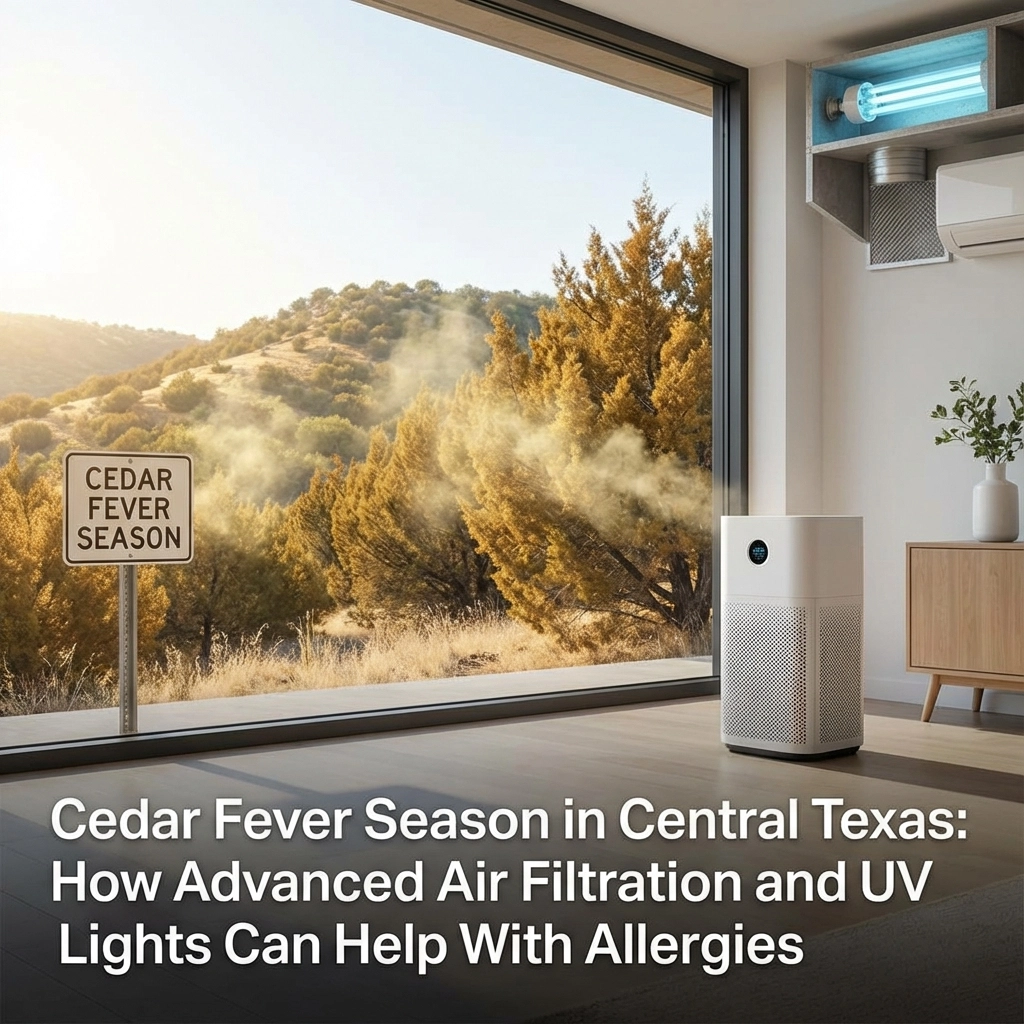
If you live in Central Texas, you probably know the drill. December rolls around, and suddenly half your neighbors are walking around looking like they’ve been hit by a truck: red eyes, runny noses, and that persistent cough that just won’t quit. Welcome to cedar fever season, folks. And if you’re one of the unlucky ones who gets slammed by it every year, you’re probably wondering if there’s anything you can do besides pop allergy pills and wait it out.
Good news: there actually are some things that can help, and they might be right inside your home’s HVAC system. Let’s talk about how advanced air filtration and UV lights can make your indoor air a whole lot more breathable during cedar season.
What Exactly Is Cedar Fever?
First things first: cedar fever isn’t actually a fever, and it’s not really caused by cedar trees. The real culprit is the Ashe juniper, which we Texans have been calling “mountain cedar” for generations. These trees are everywhere in Central Texas, especially in the Hill Country west of I-35, and they have a really annoying habit of releasing massive amounts of pollen right when most other plants are taking a winter break.
Cedar fever season typically runs from mid-November through early March, but it really kicks into high gear from December through February. The worst part? These trees don’t just release a little pollen here and there. When conditions are right: especially after a cold front brings dry, windy weather: they dump so much pollen into the air that you can actually see it like smoke coming off the trees.
Why Central Texas Gets Hit So Hard
Here’s the thing about cedar fever in our area: it’s not that the pollen is necessarily more allergenic than other types. It’s that we have SO MUCH of it. The Hill Country is basically covered in Ashe junipers, and when they all decide to release pollen at the same time, the air gets absolutely saturated with it.
Unlike most trees that pollinate in spring, these guys do their thing in winter when the air is often dry and windy. These are the perfect conditions for spreading pollen far and wide. Austin and all the surrounding communities get hit particularly hard because we’re right in the heart of juniper country.


How Advanced Air Filtration Can Actually Help
Now, here’s where things get interesting. While you can’t control what’s happening outside, you can definitely improve what’s happening inside your home. Advanced air filtration systems can remove a significant amount of cedar pollen from your indoor air. This will give you a break from the constant assault on your sinuses.
HEPA Filters: The Gold Standard
HEPA (High Efficiency Particulate Air) filters are basically the Navy SEALs of air filtration. They’re designed to capture 99.97% of particles that are 0.3 microns or larger. To put that in perspective, cedar pollen particles are typically around 20-30 microns. This means a good HEPA filter should catch virtually all of them.
The catch? Most residential HVAC systems can’t handle true HEPA filters because they create too much resistance to airflow. But there are HEPA-type or “HEPA-style” filters that work with your existing system and still do a great job on pollen.
Thick Pleated Filters: A Practical Middle Ground
If HEPA isn’t an option for your system, thick pleated filters with a high MERV rating (ideally MERV 11-13) can still make a big difference. These filters have more surface area to trap particles and are much better than those cheap fiberglass filters you might be used to.
Carbon Filters: For More Than Just Pollen
Carbon filters are great at removing odors and some chemical pollutants, but they don’t do much for pollen on their own. Some advanced filters combine pleated material for particle capture with activated carbon for odor control: giving you the best of both worlds.
Learn more about different types of filters here.
UV Lights: Your Secret Weapon Against Allergens
Here’s something a lot of people don’t know: UV lights installed in your HVAC system can actually help with more than just killing germs. While they won’t directly destroy pollen particles, they can help in a couple of important ways.
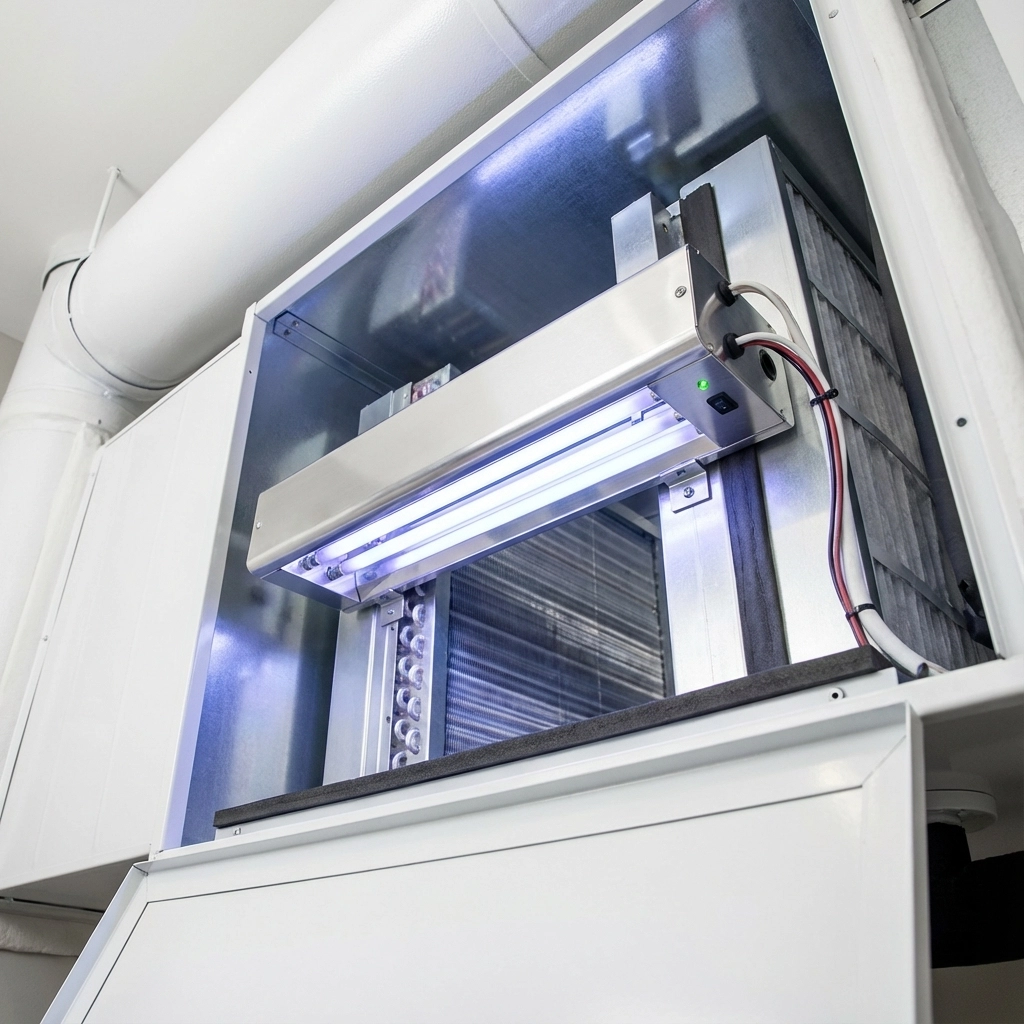
UV lights are particularly good at killing mold spores and bacteria that might be hanging out in your ductwork or on your evaporator coil. During cedar season, when your immune system is already working overtime dealing with pollen, the last thing you want is additional irritants making things worse.
Plus, UV lights help keep your HVAC system cleaner overall, which means your air filters can focus on doing their job: catching pollen: instead of dealing with other junk that’s accumulated in your system. Learn more about UV lights here.
Whole-House Solutions vs. Portable Units
You’ve got two main options when it comes to improving your indoor air quality: whole-house systems that work with your existing HVAC, or portable room units.
Whole-House Systems
Whole-house air purification systems are installed directly into your HVAC ductwork, so they clean all the air that circulates through your home. The big advantage here is that you get consistent air quality throughout your entire house, not just in one room. Plus, you’re not dealing with multiple units to maintain or the noise of portable machines running all the time.
Portable Units
Portable air purifiers can be great for targeting specific rooms: like your bedroom: where you spend a lot of time. They’re also more affordable upfront and don’t require any HVAC modifications. The downside is that they only clean the air in the immediate area, and you might need several units to make a real difference throughout your home.
What You Can Realistically Expect
Let’s be honest here: even the best air filtration system isn’t going to make cedar season disappear entirely. But here’s what you can realistically expect:
The Good Stuff:
- Significantly cleaner indoor air with much less pollen
- Better sleep quality (especially if you run your system’s fan continuously during peak pollen days)
- Reduced need for allergy medications when you’re at home
- Overall improvement in indoor air quality year-round
The Limitations:
- You’re still going to be exposed to pollen when you’re outside or when you open doors and windows
- Initial investment can be significant for whole-house systems
- Filters need regular replacement to maintain effectiveness
- Very severe allergy sufferers may still need medical treatment
Keeping Your System Running Right
Here’s the thing about air filtration: it only works if you maintain it properly. During cedar season, you might need to change your filters more frequently than usual because they’re working so hard to pull pollen out of the air.
A typical 1-2 inch filter might need changing every month during heavy pollen season instead of the usual 1-2 months. Thicker filters (4-5 inches) usually last longer but should still be checked more frequently during cedar season.
At Accu-Temp, we can help you figure out the right filtration system for your home and set up a maintenance schedule that keeps everything running smoothly. We install and service whole-house air purification systems, UV lights, and can recommend the best filters for your specific HVAC setup.
Making It Work for Your Home
Every home is different, and what works best for you depends on factors like your existing HVAC system, the size of your home, your budget, and how severely cedar fever affects you. Some folks do great with just upgrading to better filters, while others benefit from a complete air purification system with UV lights.
The key is starting with an honest assessment of your current system and what improvements would give you the biggest bang for your buck. Sometimes simple changes: like sealing ductwork leaks or upgrading your thermostat to run the fan more consistently: can make a noticeable difference in air quality.
If you’re tired of dreading cedar season every year, it might be worth exploring what advanced air filtration can do for your home. Because while we can’t control what’s happening outside, we can definitely make your indoor air a whole lot more comfortable to breathe. Learn more about allergy relief here.
Ready to take control of your indoor air quality? Get in touch with us to learn more about air filtration options that could help make this cedar season your last miserable one.