
Cool but Sticky? The Truth About Humidity and Your Central Texas Home
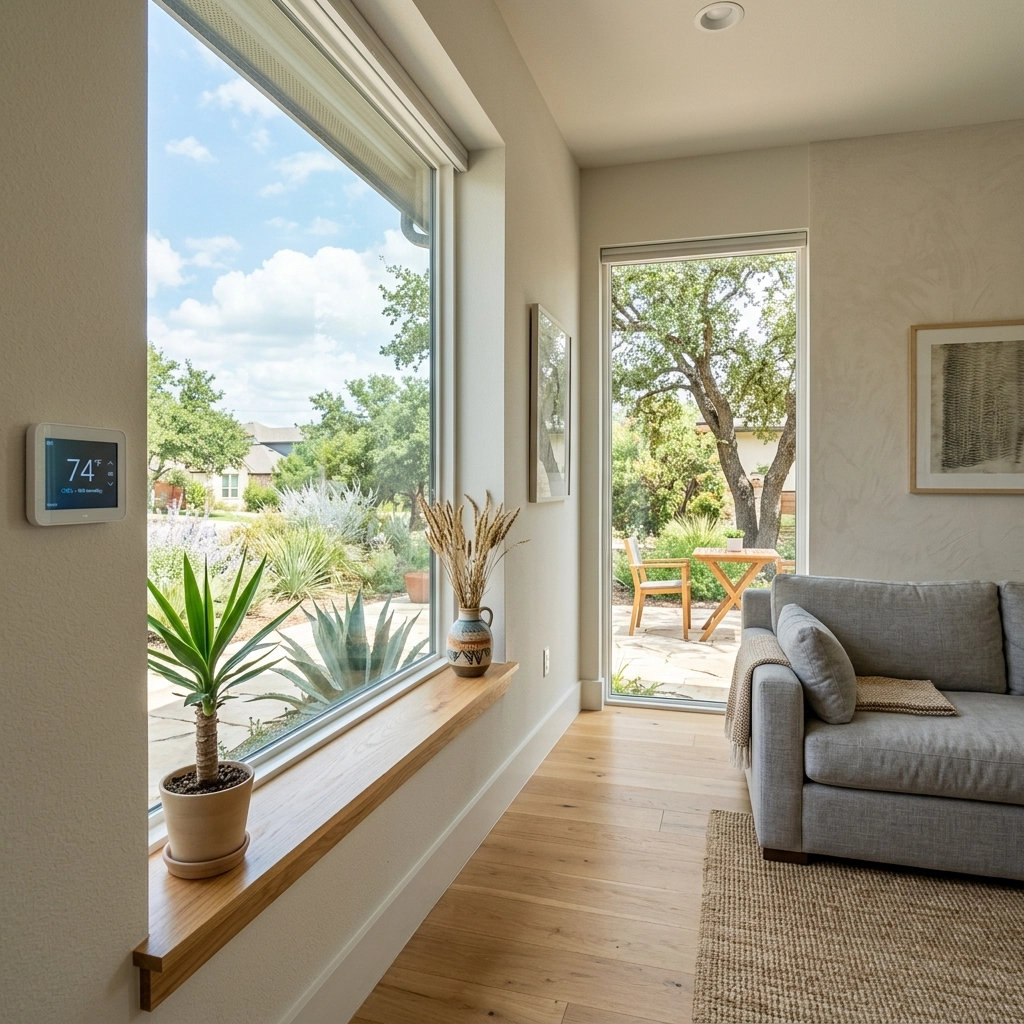
If you’ve lived in Central Texas for more than five minutes, you know the drill. The sun is blazing, the sky is that specific shade of “Texas Blue,” and the air feels like you’re walking through a warm, wet sponge. We talk a lot about the heat: triple digits are our summer norm, after all: but the real enemy of your indoor comfort isn’t always the temperature. It’s the humidity.
Have you ever walked into your house, seen the thermostat set to a crisp 72 degrees, but still felt like you needed to peel your clothes off your skin? That “cool but sticky” sensation is a classic sign that your home has a humidity problem. At Accu-Temp Air Conditioning & Heating, we hear about this all the time. Folks think their AC is broken because they aren’t comfortable, even though the air coming out of the vents is cold.
Today, we’re going to pull back the curtain on home humidity, explain why your AC might be “winning” the temperature battle but “losing” the moisture war, and look at how you can finally achieve that perfect, crisp indoor environment.
The Goldilocks Zone: Why 45–55% is the Magic Number
When it comes to indoor air, there is a “just right” range for moisture. For most people, that sweet spot is between 45% and 55% relative humidity.
Why does this range matter so much? It’s all about how your body cools itself. We humans are built-in evaporative coolers. When we get warm, we sweat, and as that sweat evaporates off our skin, it takes heat with it, cooling us down. However, evaporation requires the air around us to be dry enough to “soak up” that moisture.
If your home’s humidity is north of 60%, the air is already saturated. Your sweat stays on your skin, you feel clammy, and your body can’t shed heat efficiently. On the flip side, if the air is too dry (below 30%), you might deal with itchy skin, dry sinuses, and static shocks.
Staying in that 45–55% range doesn’t just make you feel better; it’s also better for your home. High humidity is an invitation for mold, mildew, and dust mites to move in. It can even cause wood floors to cup and musical instruments to go out of tune. Keeping it balanced is the key to a healthy air quality environment.

Your AC is a Dehumidifier (With a Catch)
A lot of people don’t realize that your air conditioner has two jobs. Its first job is to lower the temperature (sensible cooling). Its second job: which is just as important: is to remove moisture from the air (latent cooling).
As warm, humid air from your home is pulled across the freezing cold evaporator coil in your indoor unit, the moisture in the air condenses into liquid water, just like the beads of sweat on a cold soda can on a July afternoon. That water drips into a primary drain pan and flows outside.
Here is the catch: The AC only removes moisture while it is running.
In Central Texas, we often run into a situation where an AC unit is actually too good at the first job. If your system is oversized for your home, or if it’s just a particularly “mild” 85-degree day, the AC might blast the house with cold air and reach your thermostat’s set point in just 10 minutes.
Ten minutes is plenty of time to drop the temperature, but it’s not nearly enough time to pull gallons of water out of the air. This leads to the “Cool but Sticky” syndrome. The thermostat says 72, but the humidity is still at 65%. You’re cold, but you’re miserable.
The Quick Fix: The One-Degree Trick
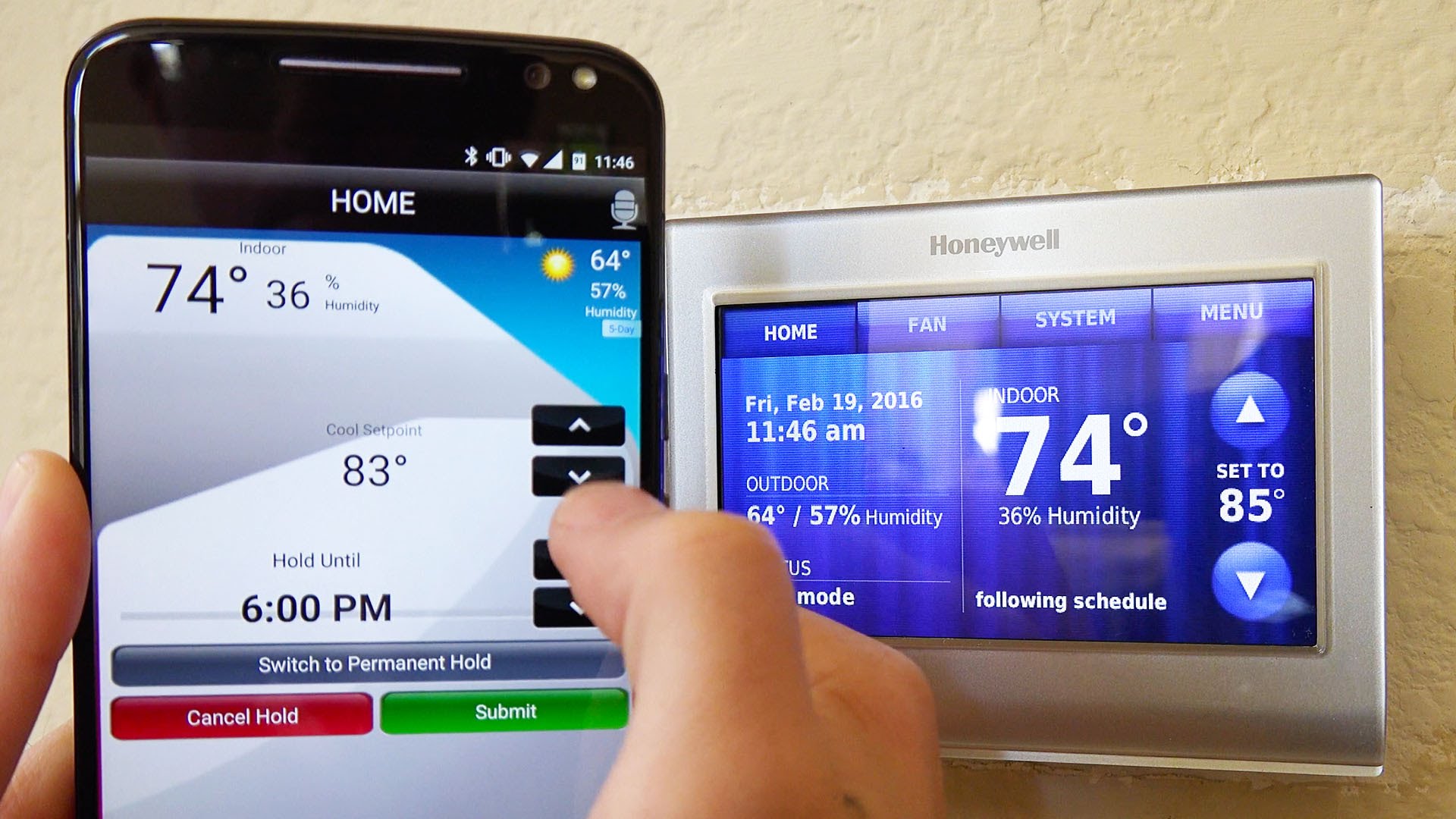
If you’re sitting on the couch feeling muggy, there’s a quick troubleshooting tip you can try right now. Go to your thermostat and turn it down just one or two degrees lower than you normally would.
By dropping the set point, you are forcing the system to run a longer cycle. That extra 15 or 20 minutes of run time allows the evaporator coil to continue “wringing out” the air in your home. It’s a simple way to bridge the gap on those days when the outdoor humidity is high but the temperature isn’t quite high enough to keep the AC running constantly.
Portable vs. Whole-Home Dehumidifiers: Finding the Right Solution
If the “one-degree trick” isn’t cutting it, or if you find yourself constantly battling clammy air, it might be time to look at dedicated dehumidification. There are two main paths you can take: portable units and whole-home systems.
Portable Dehumidifiers (The Plug-and-Play Option)
Portable dehumidifiers are the units you see at big-box appliance stores. They are “plug and play”: you find a spot for it, plug it into a standard wall outlet, and let it rip. Learn more about portable dehumidifiers here.
- The Pros: They are relatively inexpensive upfront and require no professional installation. They are great for a single problem room, like a damp basement or a laundry room.
- The Cons: They are loud, they take up floor space, and they only treat the air in their immediate vicinity. Perhaps the biggest downside is the maintenance; most have a small bucket that you have to manually empty once or twice a day. If you forget to empty it, the unit shuts off, and the humidity rushes right back in.
Whole-Home Dehumidifiers (The Professional Solution)
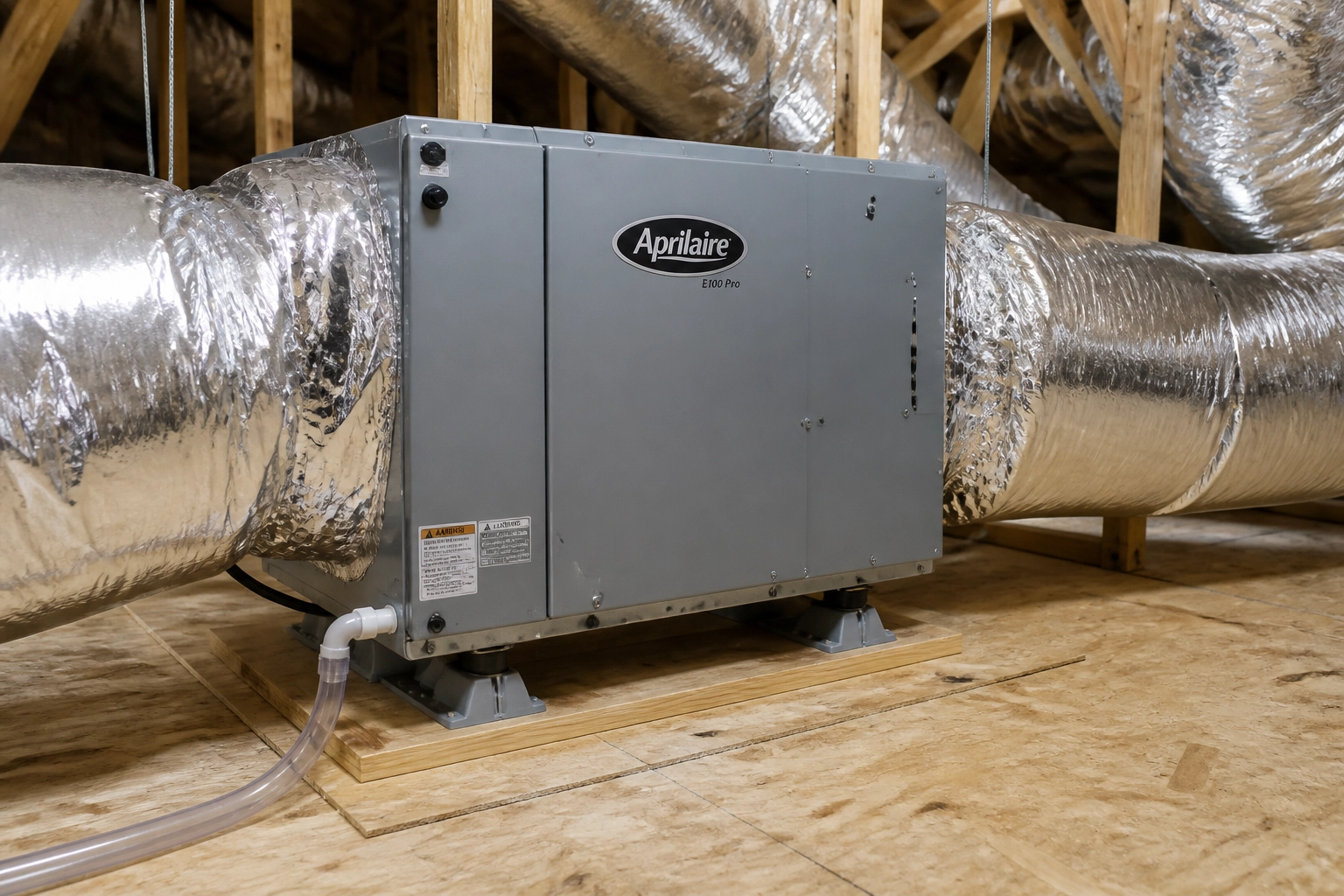
A whole-home dehumidifier is a different beast entirely. This is a heavy-duty piece of equipment that is integrated directly into your existing HVAC ductwork. Instead of treating one room, it treats every square inch of your home.

Why a Whole-Home System is a Major Project
We often get asked why a whole-home dehumidifier costs significantly more than a portable one. The answer lies in the complexity of the installation. This isn’t something you can just set in a corner and plug in. A professional installation involves several critical components:
- Ducting Integration: We have to tie the dehumidifier into your existing supply ducts.
- Dedicated Return: For maximum efficiency, we often install a dedicated return duct specifically for the dehumidifier so it can pull the most humid air directly from the living space.
- Electrical Requirements: These units pull a fair amount of power and usually require a dedicated electrical circuit to ensure they don’t trip your breakers.
- Drainage: You never have to empty a bucket with a whole-home system. However, that means we have to run a dedicated drain line, often tied into your home’s main condensate drainage system, to safely whisk all that extracted water away.
- Control Logic: We integrate the unit with your thermostat so that the dehumidifier and the AC work in harmony rather than fighting each other.
Because of the labor, the specialized parts, and the high-end machinery, a whole-home dehumidifier installation typically starts at $5,000 and up, depending on the size of your home and the modifications needed for your specific attic or closet space.
Is It Worth the Investment?
For many Central Texas homeowners, the answer is a resounding yes. When you control humidity independently of temperature, you can actually set your thermostat higher in the summer and feel more comfortable. 75 degrees at 45% humidity feels much cooler than 72 degrees at 65% humidity. This can lead to lower wear and tear on your AC unit over time.
Plus, the peace of mind knowing you are preventing mold growth and protecting your home’s structure is priceless.

Wrap Up
Don’t spend another summer feeling like you’re living in a sauna. If your home feels “cool but sticky,” it’s time to look beyond just the temperature. Whether it’s a simple thermostat adjustment, a maintenance check to ensure your system is performing correctly, or a deep dive into whole-home dehumidification, Accu-Temp is here to help.
We’ve been keeping Austin and the surrounding areas comfortable for years, and we know exactly how to handle the unique challenges of our Texas climate. Give us a call, and let’s get your home back into that 45–55% Goldilocks zone!