
SEER2 Ratings Explained: The MPG Sticker for Your Air Conditioner

Picture two similar sedans sitting side by side at a car lot. They may look alike and have comparable prices, but one gets better miles per gallon. That MPG sticker gives you a standard way to compare how much fuel each car is expected to use.
SEER2 does the same job for air conditioners. Whether you’re comparing one brand or several, the rating gives you a common efficiency yardstick: a higher SEER2 rating generally means less electricity to deliver the same amount of cooling. It helps you compare, not predict your exact monthly bill.
What does SEER2 mean?
SEER2 stands for Seasonal Energy Efficiency Ratio 2. In plain English, it measures how much cooling an air-conditioning system provides compared with the electricity it uses over a modeled cooling season.
Think of it as an efficiency score. If two properly matched systems provide the same amount of cooling under the rating test, the one with the higher SEER2 rating is expected to use less electricity.

Why did SEER2 replace SEER?
SEER2 took effect in 2023, when the U.S. Department of Energy updated its testing procedure for central air conditioners and heat pumps. The revised test, called M1, uses a higher external static pressure for ducted systems than the old test. In simple terms, it accounts for more resistance to airflow through ductwork, making the test conditions a better representation of the demands placed on a ducted system.
Because the test is stricter, SEER2 numbers usually read lower than the old SEER numbers for the same equipment. That does not mean the equipment became less efficient. The measuring stick changed.
So, an older unit rated at 16 SEER and a newer unit rated at 16 SEER2 aren’t necessarily equal: the newer SEER2 number comes from the updated test. For the same reason, don’t compare a quote that lists SEER with one that lists SEER2 as if the numbers use identical standards. The Department of Energy’s central air conditioner standards FAQ explains the updated standards.
What do SEER2 numbers mean for a Central Texas home?
For a typical split-system central air conditioner installed in Texas, federal regional minimums depend on system capacity. Texas is included in the DOE’s Southeast region for these standards. For split systems below 45,000 Btu/h, the minimum is 14.3 SEER2; for systems at or above that capacity, it is 13.8 SEER2. These figures apply to the specified equipment category, not every type of cooling system, so ask a contractor to confirm the requirement for the system being quoted.
Above the applicable minimum, you may see ratings in a range of efficiency levels. As a rough shopping guide, not an official grading scale, some homeowners might think of:
- Around 14.3–15.9 SEER2: a basic efficiency level for eligible systems.
- Around 16–17.9 SEER2: a mid-range option.
- 18 SEER2 and above: a higher-efficiency option.
Exact ratings and available models vary, and the rating applies to the tested combination of indoor and outdoor equipment, not necessarily to an outdoor unit by itself. Ask whether the quote identifies the matched system and its certified rating.
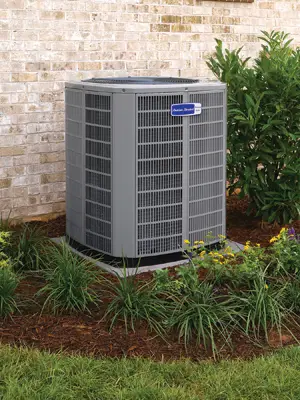

Higher SEER2 can mean lower cooling costs, but it isn’t a bill estimate
The comparison works best when the systems are delivering the same amount of cooling and all other factors are equal. For example, a 17 SEER2 system would use roughly 16% less electricity for the same modeled cooling output than a 14.3 SEER2 system. That’s a useful illustration of the rating’s meaning, not a promise that your total bill will fall by that amount.
The MPG analogy helps here, too. A car’s sticker doesn’t know how far you’ll drive or how you’ll drive it. And SEER2 doesn’t know your thermostat habits, home insulation, duct condition, or how hot your attic gets. Your actual “mileage” depends on all of those things, plus Austin’s long cooling season.
There’s also a diminishing-returns trade-off. The energy reduction from moving up a rating level can be meaningful, but each additional step may save less electricity than the one before it. Just as improving from 22 MPG to 45 MPG saves much more fuel per mile than improving from 45 to 50 MPG, a move from a lower efficiency level to a middle one may offer more savings per added dollar than a jump from a mid-range system to a premium model. Whether the extra upfront cost makes sense depends on the equipment price, electricity rates, how much you run the AC, and how long you expect to stay in the home.
The two things to remember when comparing quotes
1. Use the rating to compare options on equal footing
SEER2 is a standardized rating, so it’s more useful for comparing equipment across brands than a vague claim that one system is “high efficiency.” Check the yellow EnergyGuide label and the product spec sheet, and ask each contractor to identify the SEER2 rating of the equipment included in the quote.
The Federal Trade Commission’s EnergyGuide information explains the labels. Their estimated energy costs are based on standard assumptions, so treat them as comparison information, not a forecast of your home’s bill.
2. Remember that the rating doesn’t tell you what your actual bill will be
A high-SEER2 unit installed with leaky attic ducts, poor airflow, or incorrect sizing may not deliver the results you expect. In an older Austin home, a great rating on the equipment label can’t overcome every problem elsewhere in the system. Much like a fuel-efficient car’s MPG would change if you were constantly towing a heavy trailer.
The rating is one important part of the decision. The condition of your home and the quality of the installation matter too.
What you can check yourself, and what needs a professional
Homeowners can:
- Find the SEER2 rating on the yellow EnergyGuide label and the equipment spec sheet.
- Compare the stated ratings across quotes, checking that each contractor is quoting the same type and capacity of system.
- Ask, “What is the SEER2 rating for the complete matched system in this quote?”
- Replace air filters as recommended and keep leaves or other debris clear of the outdoor unit. For coil cleaning or other maintenance, arrange professional service rather than risking damage to the equipment.
In Austin, where air conditioners can run for many hours across a long cooling season, efficiency differences have more opportunities to add up. Current local utility rebates or other incentives may also affect the cost calculation, but programs and eligibility can change. Check current terms with the program administrator or ask us what to look into; don’t assume a particular rating automatically qualifies.
A qualified HVAC professional should handle:
- System sizing. A load calculation considers your home’s insulation, windows, layout, orientation, and other factors. Square footage alone, or a rule of thumb, isn’t enough. See our guide to why proper HVAC sizing matters.
- Duct inspection and sealing. Leaks or airflow problems can undermine comfort and efficiency.
- System matching and installation. The indoor and outdoor components must be compatible, and correct installation is essential to achieving the system’s rated performance.
Choosing the right SEER2 rating for your home
The highest rating isn’t automatically the best choice for every homeowner. The right level depends on the home, the installation, the added cost, your budget, and how long you plan to stay. Our SEER2 overview and guide to split HVAC systems offer more background as you compare options.
At Accu-Temp Air Conditioning & Heating, we believe you should have the information you need to decide without pressure to choose a premium system. We’ll explain the equipment options and the numbers, including what affects real-world performance, so you can choose what makes sense for your home.