
Is Your AC Making Weird Noises? Here’s What Your Condenser Is Trying to Tell You

Picture this: It’s a classic Central Texas afternoon. The sun is beating down on your roof like it owes the sun money, the humidity is high enough to make you feel like you’re breathing through a warm, wet washcloth, and you are finally settling into your favorite chair with a glass of iced tea. You’re ready to enjoy that sweet, sweet 72-degree indoor sanctuary.
Then you hear it.
Clunk. Screeeech. Buzz. Thump.
It’s coming from outside. Your AC condenser, that big metal box sitting in the mulch next to your flowerbeds, is no longer humming its usual low-key tune. Instead, it sounds like a heavy metal band is having a soundcheck in your backyard, and honestly? They aren’t very good.
At Accu-Temp Air Conditioning & Heating, we’ve heard it all. From the “poltergeist in the vents” to the “screeching cat in the condenser,” noise is usually the first way your HVAC system screams for help. But what do those specific sounds actually mean? Is it a quick fix, or are you looking at a full-blown emergency?
Let’s break down the secret language of your AC condenser and find out what it’s trying to tell you.
The Rattler: When Things Get Loose
If your condenser sounds like a jar of pennies in a dryer, you’ve likely got a “Rattler” on your hands. In the HVAC world, rattling is usually the result of vibration meeting gravity.
Over time, the constant vibration of your system can loosen the screws and bolts that hold the cabinet together. It could also be that a fan blade has become slightly loose or out of balance. When that blade spins at high speeds, even a tiny bit of “wobble” can cause it to strike the protective metal cage or the sides of the unit.
What it means:
Often, it’s just a loose screw or a piece of debris (like a wayward Texas twig or a pebble) that’s fallen into the unit. However, if a fan blade is actually damaged or bent, it can lead to much bigger problems, like destroying the motor or the entire fan assembly.
The Accu-Temp Take:
Don’t wait for the “rattle” to become a “shatter.” Most of the time, a quick maintenance visit can tighten things up and keep the peace.
The Screecher: A Cry for Lubrication
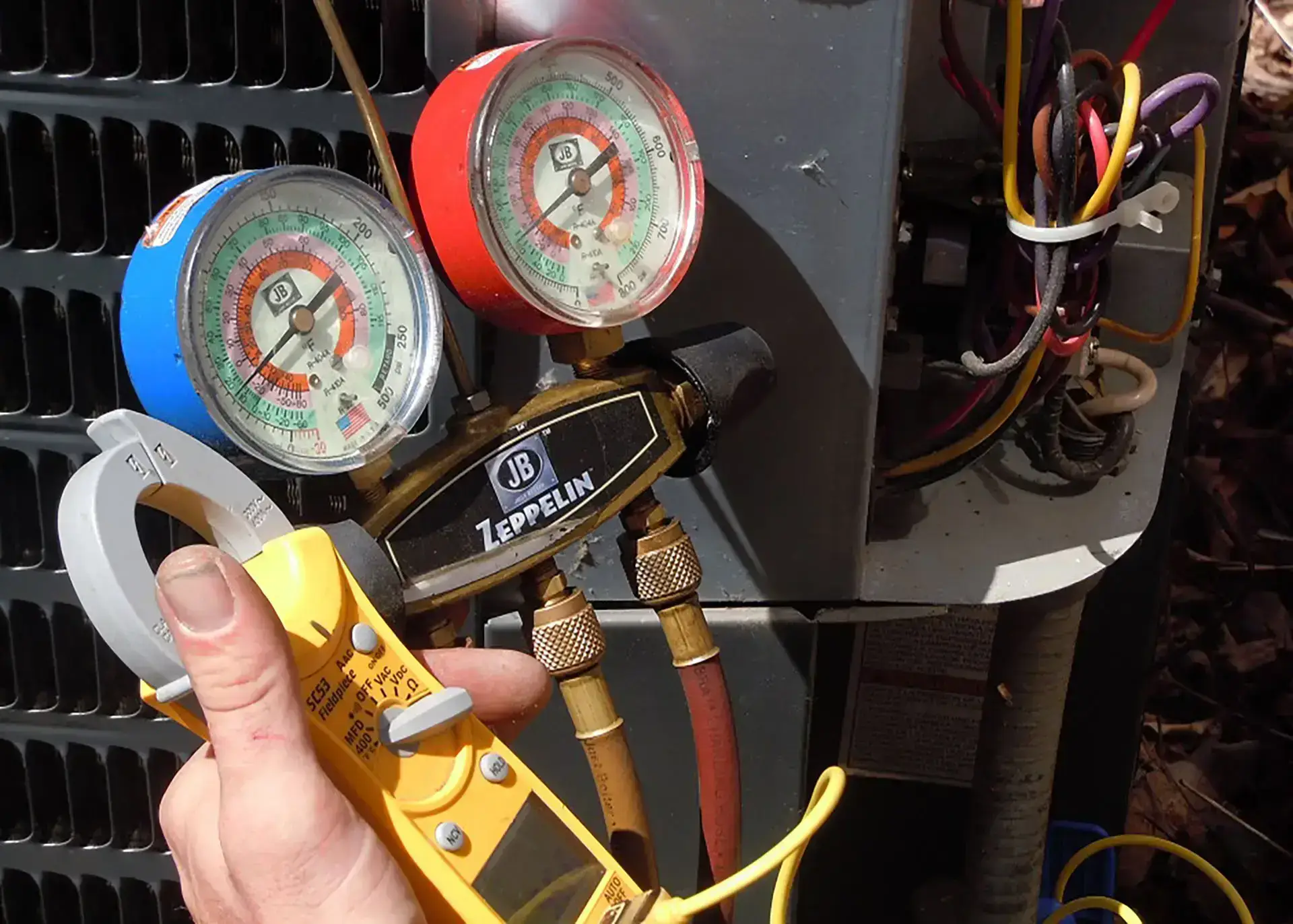
Few sounds are as bone-chilling as a high-pitched screeching or squealing coming from your AC. It’s the kind of sound that makes the neighborhood dogs howl and your hair stand on end.
In older systems, this might be a slipped belt, but since most modern Central Texas homes use direct-drive motors, that screeching is almost certainly coming from the fan motor bearings.
What it means:
Bearings are the tiny metal balls that allow the motor to spin smoothly. When they run out of lubrication or start to wear down, they create immense friction. That friction produces that ear-piercing squeal. If you ignore it, the friction will eventually generate enough heat to seize the motor entirely, leaving you in a very hot house with a very dead AC.
The Chatterbox: Electrical Gremlins
Does your AC sound like it’s clicking repeatedly or “chattering” when it tries to start up? Or maybe there’s a constant, low-grade buzzing sound whenever the unit is running?
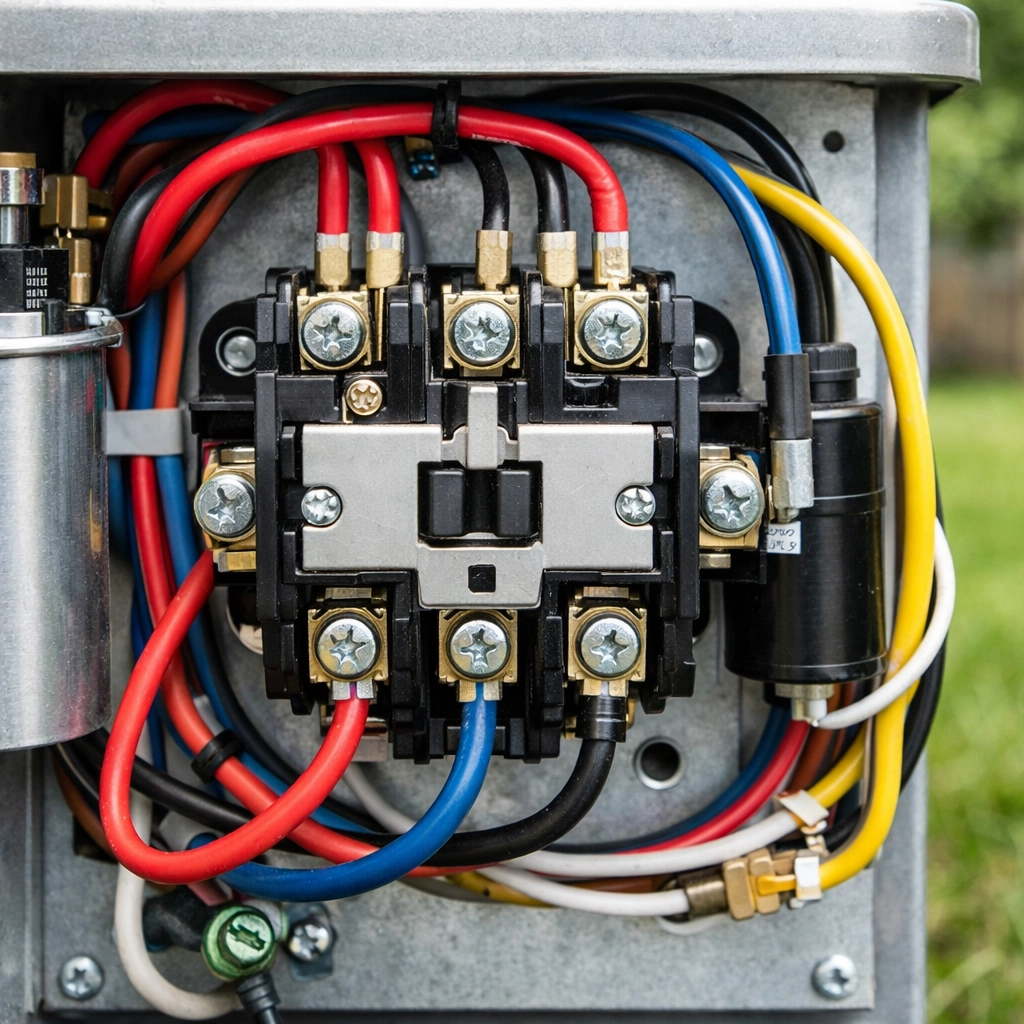
This is often the sign of a faulty contactor. The contactor is a small electrical component that acts like a switch, telling your condenser when to turn on and off based on signals from your thermostat.
What it means:
When a contactor starts to fail, it can struggle to maintain a solid electrical connection. This causes the “chattering” noise as the switch rapidly opens and closes. Buzzing can also indicate an electrical issue within the compressor itself or a failing capacitor. Electrical issues aren’t just noisy; they’re a fire hazard and can lead to expensive component failures if the system keeps trying to “force” a start.
The Banger: The Sound of Internal Struggle
If your AC sounds like someone is hitting the side of the unit with a hammer, we’ve got bad news: you’ve likely got a “Banger.” This is often the most serious sound a condenser can make.
What it means:
Banging or loud thumping usually indicates that something has come loose inside the compressor. The compressor is the “heart” of your AC system, and it’s a sealed unit. If internal parts like the connecting rod or the piston pin break or wear out, they’ll rattle around inside the pressurized housing.
Alternatively, a banging sound could mean your unit isn’t level. If the concrete pad beneath your AC has shifted (thanks to that lovely Texas limestone and shifting soil), the unit might be vibrating so violently that it’s hitting its own internal supports.
The Sissing Hiss: A Silent (but Expensive) Leak
Hissing is a unique sound. It’s not mechanical; it’s fluid. If your condenser sounds like a giant snake is hiding inside, you’re likely hearing high-pressure refrigerant escaping from a line or a valve.
What it means:
Refrigerant is the lifeblood of your cooling system. A leak doesn’t just stop your house from getting cold; it forces your system to work twice as hard, skyrocketing your energy bills and eventually causing the compressor to burn out. If you hear hissing, turn the system off immediately and call in the pros.
Why Central Texas Homeowners Can’t Ignore the Noise
Living in Austin, Cedar Park, or Round Rock means your AC isn’t just a luxury, it’s a survival tool. Our systems work harder than almost anywhere else in the country. A “small” noise in April can become a total system meltdown by the time July’s triple-digit heatwaves arrive.
Ignoring a noisy condenser is like ignoring a check engine light while driving through the desert. It might keep running for a while, but the eventual breakdown is going to be a lot more expensive than a simple tune-up.
The Accu-Temp Difference: We’re Not Here to Sell You a Spaceship
We get it. When your AC makes a weird noise, your first thought is probably, “Great, there goes my vacation fund. The AC guy is going to tell me I need a whole new $15,000 system.”
At Accu-Temp Air Conditioning & Heating, we do things differently. We’re local, and we value our reputation in the Austin community. Our philosophy is simple: Expert diagnostics, no unnecessary repairs.
If your condenser is noisy because of a bolt or a contactor, that’s exactly what we’re going to tell you. We won’t try to upsell you on a brand-new 2-stage condenser if your current unit just needs a little TLC and some professional maintenance. We believe in fixing it right the first time and keeping your home comfortable without breaking the bank.
How to Prevent the “Backyard Band” from Returning
While some mechanical failures are inevitable as units age, many of these noises can be prevented with a little bit of foresight:
- Keep it Clean: Trim back bushes and weeds at least two feet away from your unit. Debris inside the cabinet is a leading cause of rattling and fan damage.
- Check the Pad: Every once in a while, take a look at the base of your unit. Is it level? If it’s leaning, it’s putting extra stress on the refrigerant lines.
- Change Your Filters: It sounds unrelated, but a clogged 1-inch filter or 5-inch filter restricts airflow. This makes your condenser work harder, leading to overheating and premature bearing failure.
- Schedule Annual Maintenance: A professional can catch a “chattering” contactor or a “dry” bearing long before it starts making enough noise to wake the neighbors.

Ready for Some Peace and Quiet?
If your AC is trying to tell you something, don’t leave it on “read.” Whether it’s a buzz, a squeak, or a bang, the experts at Accu-Temp are ready to translate those noises into a clear, honest repair plan.
We’ve been serving the Austin area with pride, ensuring that when you come home from a long day, the only thing you hear is the sound of… well, nothing. Just cool, quiet comfort.
Don’t let a noisy AC ruin your summer. Contact us today or visit our FYI section for more tips on keeping your home running smoothly. We’re here to make comfort easy!