
Your AC Lives in a 150°F Attic: Why Location Matters in Austin Area Homes
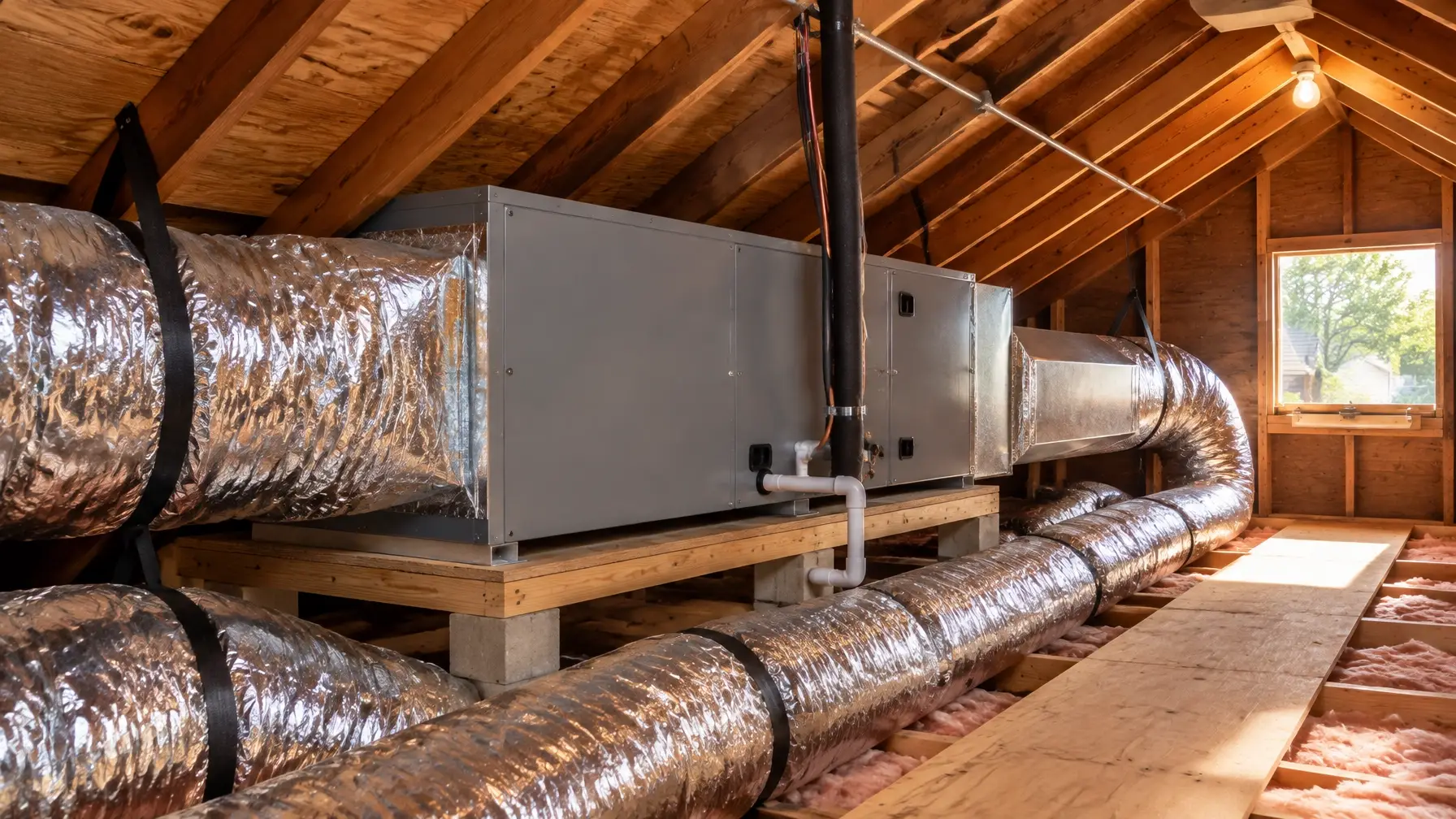
If your Austin-area home has an air handler or furnace in the attic, your HVAC system may be starting every cooling cycle in one of the harshest places on the property.
On a sunny Central Texas afternoon, an unconditioned attic can reach 130–150°F or more. That heat affects the equipment, the ductwork, the filter, and the quality of the air reaching your rooms. In older Austin homes, the situation can be even more challenging because the system may be squeezed into a tight closet, crawlspace, or platform that was never designed for modern HVAC equipment.
The location of your system matters almost as much as the brand on the cabinet.
Why an attic-mounted system works harder
Your air conditioner installed in a conditioned closet is protected from the worst outdoor temperatures. An air handler sitting in a hot attic is not.
Your equipment must operate in extreme heat while the ducts carry cool air through the same environment. That creates two separate problems:
- The equipment is exposed to higher operating temperatures.
- The ductwork can gain heat and lose conditioned air before it reaches your rooms.
Imagine 55°F supply air traveling through ductwork surrounded by 140°F attic air. Even with insulation, the temperature difference is substantial. If the insulation is thin, damaged, compressed, or missing, the duct surface can absorb heat quickly.
The result may be:
- Longer cooling cycles
- Higher summer utility bills
- Rooms that stay warmer than the thermostat setting
- More stress on the blower motor and compressor
- Increased wear on duct connections and flexible duct material
- Reduced comfort in rooms farthest from the air handler
Duct leaks make the problem worse. A disconnected collar or loose connection can allow cooled air to escape into the attic while pulling dusty, hot attic air into the system.
For older-home comfort challenges, our guide to HVAC solutions for older Austin homes covers several of these issues, including undersized returns, limited installation space, and outdated duct layouts.
Old duct insulation may not be enough
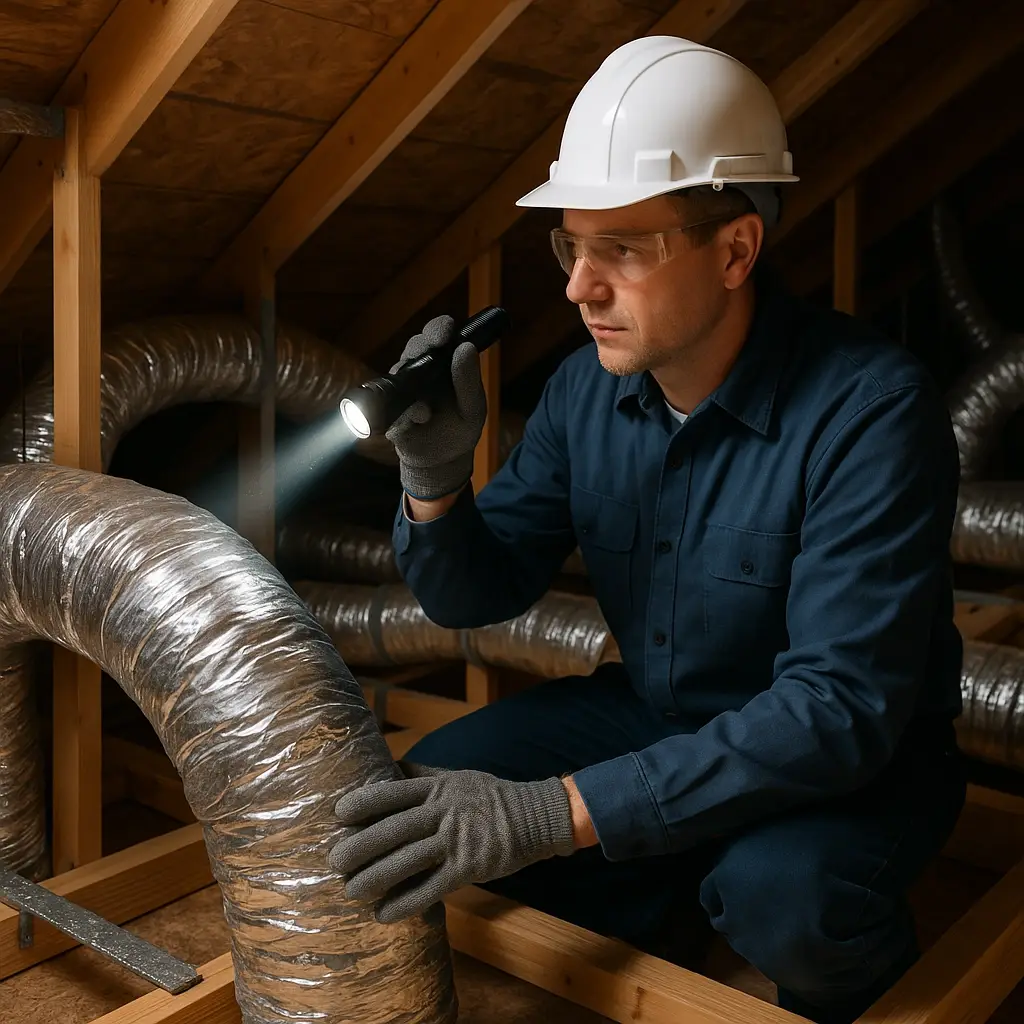
Many older homes have ductwork covered in insulation that is much thinner than what is recommended for today’s conditions. Some systems may have aging flex duct with compressed insulation, gaps, or damaged outer jackets.
For exposed attic ductwork, upgrading toward R-8 insulation can help reduce heat gain. The insulation level is only part of the solution, though. Ducts also need to be:
- Properly sized
- Sealed at joints and collars
- Supported so they do not sag or kink
- Protected from crushing and foot traffic
- Routed as efficiently as the structure allows
Mastic or approved foil tape is typically used for duct sealing. Ordinary cloth-backed “duct tape” often dries out and fails in hot attic conditions.
In some Austin area homes, ducts can be placed lower in the attic insulation or otherwise protected from the hottest attic air. Building America provides technical guidance on ducts buried in attic insulation, but this is not a do-it-yourself project. The ductwork must be sealed, supported, insulated, and buried correctly.
Attic improvements can matter more than a bigger AC
When your home struggles to cool, the first suggestion is sometimes to install a larger air conditioner and that is not always the right answer.
If the attic is poorly insulated and the ducts are leaking, a larger system may simply push more conditioned air into a hot attic. Oversizing can also create new problems, including short cycling, uneven temperatures, and poor humidity removal.
More productive improvements may include:
- Air-sealing penetrations between the living area and attic
- Increasing attic-floor insulation
- Improving soffit and exhaust ventilation
- Adding or repairing duct insulation
- Sealing duct joints and replacing damaged sections
- Improving the return-air path
- Creating a serviceable filter location
Radiant barriers can also reduce heat transfer from the roof deck, but they should be viewed as a supplement, not a substitute for adequate attic insulation and properly sealed ducts.
The best improvement depends on the home. Sometimes the equipment is operating normally and the attic is the real problem.
Why older Austin area homes often have the toughest layouts
Homes built from the 1940s through the 1970s were not designed around today’s HVAC equipment or comfort expectations. Many Austin bungalows, ranch homes, and pier-and-beam houses have some combination of:
- Undersized return-air openings
- Only one central return for multiple rooms
- Narrow attic access
- Platform-mounted horizontal air handlers
- Ductwork routed around framing and plumbing
- Sagging or disconnected flex duct
- Very limited clearance around the equipment
- Insulation that has settled, shifted, or been removed during repairs
Your unit may technically fit in an attic or closet while still being difficult to service properly. There needs to be enough room to remove panels, replace filters, inspect electrical components, test airflow, and safely repair drain lines.
If technicians cannot comfortably reach the equipment, maintenance is more likely to be postponed. Homeowners may also avoid calling for an inspection because they know the unit is difficult to access.
That lack of maintenance can shorten equipment life, not necessarily because the system is poorly made, but because small issues go unnoticed.
Crawlspaces and closets create different problems
Attic systems deal primarily with extreme heat. Crawlspace systems may face less heat gain, but they often have problems with moisture, dust, pests, and access.
A horizontal unit under an older pier-and-beam home may be tucked behind framing with barely enough room to reach the filter or electrical panel. A closet installation may have no proper filter rack, inadequate return-air space, or a door that blocks airflow when closed.
In some older homes, the return air is pulled from a dusty hallway instead of through a properly sized return grille. That can increase dust buildup and make the system work harder.
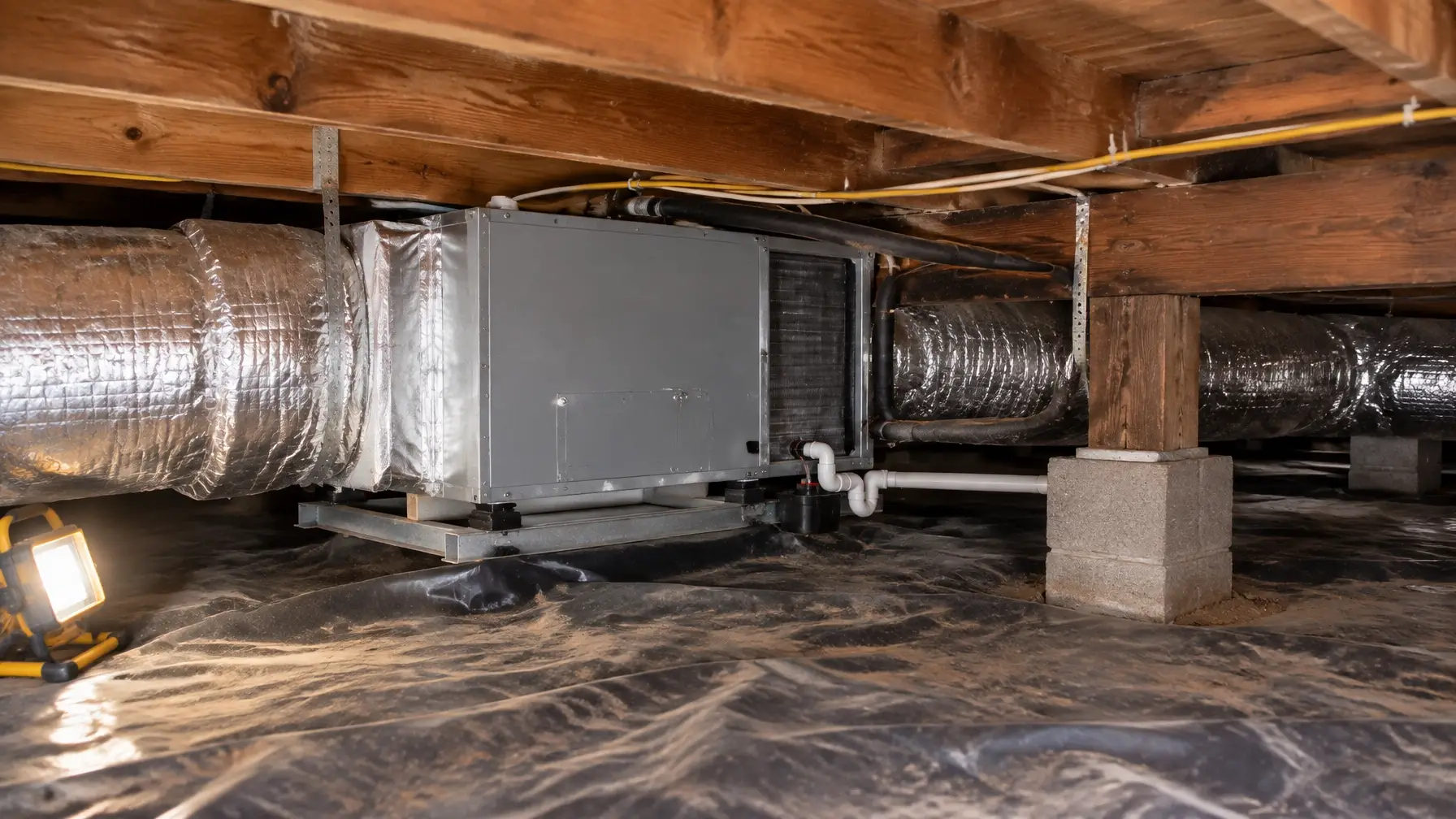
A cramped installation is not automatically unsafe or unworkable, but it does deserve a careful evaluation. The right solution may be a better filter rack, a modified return, improved access, duct repairs, or, when practical, a relocation.
Relocating HVAC equipment is a significant project. It can involve electrical work, refrigerant lines, drain lines, duct changes, structural considerations, and code requirements. It should not be treated as a simple equipment swap.
Older insulation and duct wrap require caution
If your Austin area home predates the 1980s, you may encounter old insulation, duct wrap, or pipe insulation that could contain asbestos. You cannot confirm asbestos by appearance alone.
Do not cut, scrape, pull, vacuum, or brush suspected material. Do not crawl through loose insulation just to inspect a duct or air handler. If old duct wrap is damaged, crumbly, or in the way of planned HVAC work, stop and contact an appropriately qualified asbestos professional before disturbing it.
The same caution applies to old wiring and deteriorated electrical components. A homeowner’s attic inspection should be limited to what can be observed safely from a stable, accessible location.
What homeowners can safely check
You can perform a few basic checks without opening the equipment or crawling through the attic:
- Change the filter on the recommended schedule.
- Keep the area around the indoor unit and attic access clear.
- Look for obvious crushed, disconnected, or sagging ducts from a safe position.
- Watch for dust trails around duct connections.
- Note musty smells, unusual attic odors, or new hot spots in the home.
- Check whether the filter is difficult to reach or appears to be pulling through a gap.
- Make sure stored boxes and belongings are not blocking return grilles or equipment access.
Do not walk across unsupported ceiling drywall, disturb loose insulation, handle old duct wrap, or work around exposed wiring. Think you see evidence of rodent damage? Read more about that topic here.
What requires a professional
A qualified HVAC technician should handle:
- Static-pressure and airflow testing
- Return-air sizing evaluations
- Duct leakage testing and sealing
- Duct replacement or resizing
- R-8 duct-insulation upgrades
- Attic insulation and radiant-barrier work
- Equipment relocation
- Refrigerant, electrical, drain, and safety repairs
- Any work around suspected asbestos or unsafe wiring
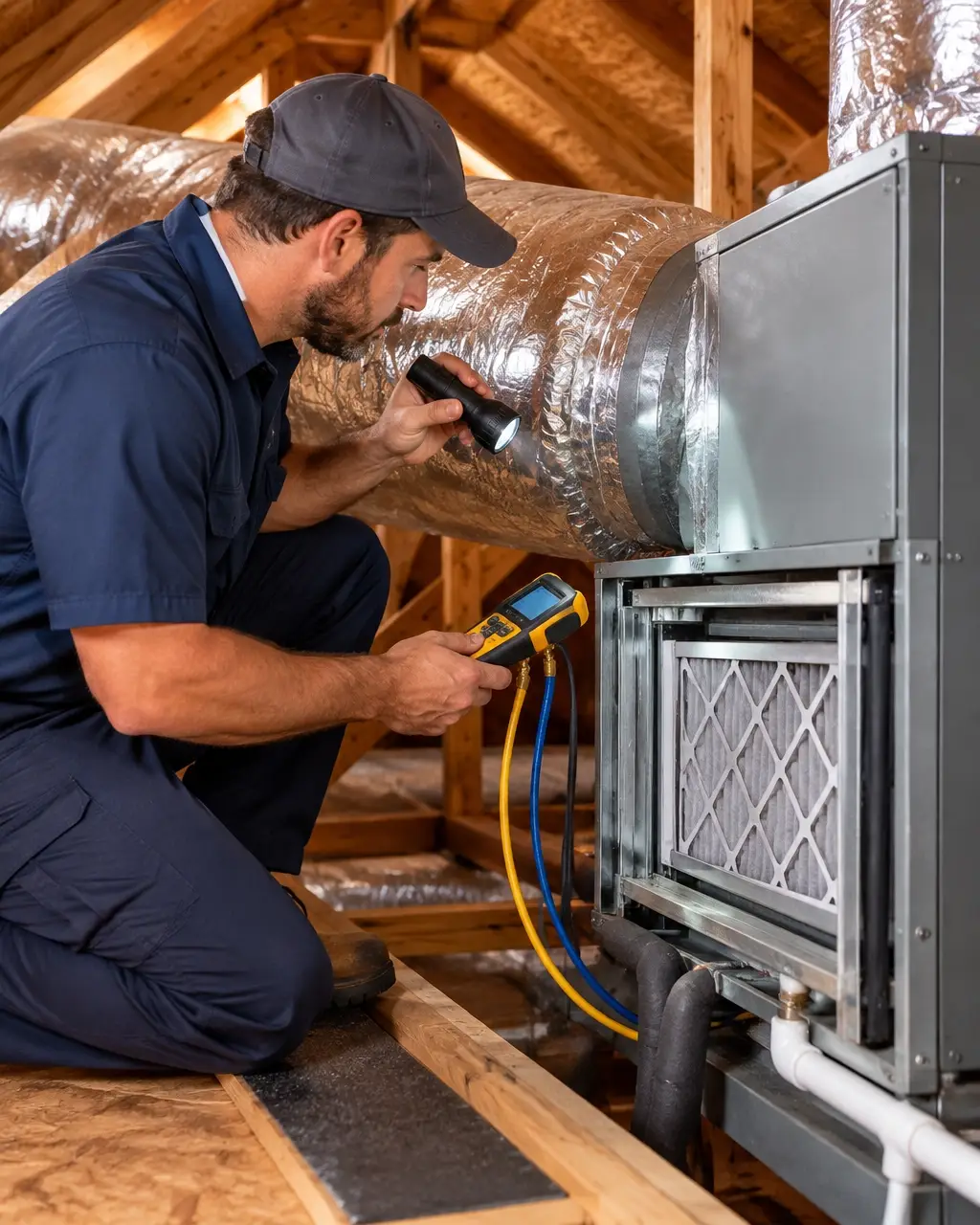
A proper diagnosis should look at the whole system, not just the outdoor condenser or thermostat. At Accu-Temp, we can help determine whether the equipment is failing, the duct system is restricting airflow, or the attic and crawlspace conditions are undermining an otherwise serviceable system.

The practical takeaway
An air conditioner that performs well in a conditioned closet may have a much shorter, harder life in a 150°F attic. That does not mean every attic-mounted system needs to be replaced or relocated.
It means the equipment, ductwork, insulation, return-air path, and service access should be evaluated together.
For an older Central Texas home, the most sensible order may be:
- Confirm the equipment is correctly sized and operating safely.
- Test airflow and static pressure.
- Seal and repair accessible ductwork.
- Improve attic insulation and air sealing.
- Correct return-air or filter problems.
- Consider relocation or replacement only when the existing setup cannot be made reliable.
There is no benefit in buying a bigger system to compensate for a hot, leaky attic. Sometimes the best investment is improving the space around the equipment.
If your system is in an attic, crawlspace, or cramped closet and your home is difficult to cool, contact Accu-Temp Air Conditioning & Heating. We will explain what we find, outline your options, and tell you honestly if the equipment is fine and the attic is the problem.