
Setting your thermostat to 68°F Is Costing You Hundreds
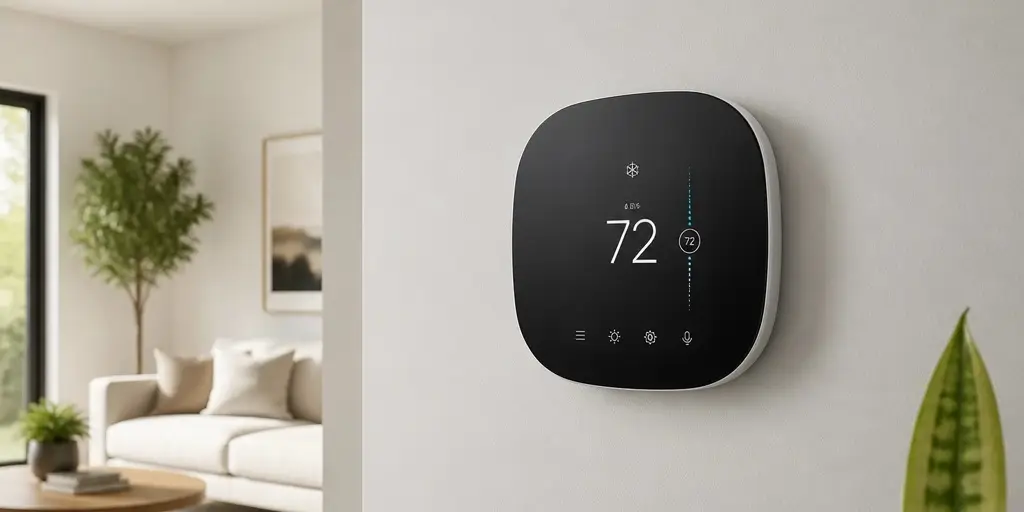
When a Central Texas afternoon reaches 100°F, setting your thermostat to 68°F can feel like the fastest way to cool down. Unfortunately, your air conditioner does not work like a freezer. Lowering the number does not give the system extra cooling power: it only tells it to keep running longer.
That can mean higher electricity bills, more wear on expensive components, and a home that still never reaches the temperature you selected.
The commonly discussed 20-degree rule helps explain why. It is not an absolute limit, but it is a useful guideline for understanding what a typical residential air conditioner can realistically handle.
What is the 20-degree rule?
The 20-degree rule says that most residential air conditioning systems are designed to maintain an indoor temperature roughly 15 to 20 degrees cooler than the outdoor temperature under normal design conditions.
So, if it is 100°F outside, a properly operating system may be working toward an indoor temperature in the upper 70s or around 80°F, depending on factors such as:
- The size and condition of the system
- Insulation and air sealing
- Window exposure
- Ductwork and airflow
- Indoor heat from people and appliances
- The home’s layout
- Outdoor humidity and solar heat
That does not mean every home will stop exactly 20 degrees below the outdoor temperature. A well-designed, efficient system may do better under certain conditions. Likewise, a home with poor insulation, leaky ducts, or significant sun exposure may struggle to reach even that difference.
The rule is best viewed as a design and efficiency guideline: not a hard physical law. As Popular Mechanics explains, the number is related to how residential systems are sized to meet a building’s expected cooling load.
Why 100°F outside and 68°F inside is such a big demand
At 100°F outdoors, a thermostat setting of 68°F creates a 32-degree indoor-outdoor difference. That is substantially more than the roughly 15- to 20-degree difference many systems are designed to maintain.
Your home is constantly gaining heat through:
- The roof and attic
- Exterior walls and windows
- Gaps around doors and windows
- Ductwork in hot attics or crawl spaces
- Cooking, lighting, electronics, and appliances
- People and pets inside the home
Your air conditioner removes this heat in the form of BTUs, or British thermal units. An AC system has a specific cooling capacity: such as 24,000, 36,000, or 60,000 BTUs per hour. That capacity is not unlimited.
Think of it like a bucket removing water from a leaking room. If the bucket removes water faster than it enters, the level goes down. If water enters just as quickly as the bucket can remove it, the level stays about the same. If water enters faster, the level rises.
Your air conditioner is the bucket. The heat entering your home is the leak.
When the heat load is greater than the system’s available capacity, the temperature may level off above the thermostat setting. Setting the thermostat even lower does not increase the system’s BTU output. It simply keeps the system operating while it tries to reach an unrealistic target.
The 20-degree rule can mean two different things
HVAC professionals also use “20-degree rule” to describe the temperature difference between the air returning to your system and the air leaving the supply vents.
For example, if return air is 78°F, supply air coming from the vents may commonly be around 58°F to 63°F under appropriate operating conditions. This is often called the system’s temperature differential, or delta T.
That indoor measurement is different from the outdoor-to-indoor temperature difference.
Both ideas are useful:
- Outdoor-to-indoor difference: A general guideline for what the system can maintain during heavy outdoor heat.
- Return-to-supply difference: A diagnostic measurement a technician can use to evaluate system performance.
A temperature reading at one vent is not enough to determine whether your air conditioner is healthy. Airflow, humidity, refrigerant charge, coil condition, ductwork, and measurement conditions all matter. Accu-Temp includes checking temperature differential as part of its routine maintenance services.
Setting the thermostat lower does not cool the house faster
This is one of the most common air conditioning misunderstandings.
If your home is 80°F and you set the thermostat to 75°F, the system will cool at essentially the same rate as it would if you set it to 68°F. A standard single-stage AC does not suddenly work harder because you selected a lower number.
The lower setting only changes how long the system is instructed to run.
If the system can comfortably reach 75°F, it will shut off when it gets there. If you select 68°F and the system cannot reach that temperature during a 100°F afternoon, it may run continuously without ever satisfying the thermostat.
As Better Homes & Gardens notes, air conditioners generally cool at a consistent rate regardless of how low the thermostat is set.
How the wrong setting can increase your energy bill
A longer runtime uses more electricity. The exact cost depends on your system’s efficiency, electrical rate, duct condition, weather, and how many hours the unit operates. That means no honest HVAC professional can promise that a particular thermostat setting will cost exactly a certain amount.
However, an AC that runs for many additional hours every day during a long Texas heat wave can add up quickly. For some homeowners, the difference over a season may reach hundreds of dollars.
The cost is not just about the temperature on the thermostat. It is about the size of the temperature difference and how long the system must fight the heat load.
A setting near 78°F gives your system a more realistic target and reduces the amount of work required to maintain comfort. If 78°F feels warmer than you prefer, try combining it with fans, shade, and improved humidity control rather than immediately dropping the thermostat to 68°F.


Overworking can shorten the life of your AC
Long, demanding runtimes place additional stress on components such as:
- The compressor
- Condenser fan motor
- Blower motor
- Capacitor
- Electrical connections
- Indoor and outdoor coils
- Drain system
Continuous operation is not automatically a sign of failure. On an exceptionally hot day, a properly operating system may run for long periods. But if it runs constantly on ordinary summer days, cannot maintain a reasonable setting, or begins making unusual sounds, it is worth having the system checked.
It is also important to separate overworking from short-cycling. Setting the thermostat to 68°F usually causes longer runtimes when the system cannot reach the setting. Short cycling (turning on and off frequently) can be caused by an oversized system, restricted airflow, thermostat problems, or other issues. Both patterns deserve attention because neither provides efficient, reliable comfort.
Humidity makes the problem worse
Austin-area homeowners are dealing with more than temperature. Moisture in the air also affects how comfortable a home feels.
Your air conditioner performs two jobs:
- Sensible cooling: Lowering the air temperature
- Latent cooling: Removing moisture from the air
On humid days, some of the system’s cooling capacity is used to pull moisture out of the air. That leaves less capacity available for lowering the temperature. As a result, your home may feel sticky even when the thermostat displays a reasonable number.
High indoor humidity can also contribute to:
- Musty smells
- Condensation
- Mold and microbial growth concerns
- Swollen wood or flooring
- Poorer comfort at a normal thermostat setting
A very large system may create another humidity problem. If it cools the home too quickly and shuts off before running long enough to remove moisture, the temperature may look fine while the air still feels damp.
If your home feels clammy at 76°F to 78°F, the answer may not be a colder thermostat setting. The issue could involve airflow, duct leakage, drainage, system sizing, insulation, or a need for additional humidity control.
Six practical ways to help your AC keep up
1. Start with a thermostat setting around 78°F
Use 78°F as a reasonable starting point when you are home, then adjust based on comfort, health needs, and humidity. Raising the temperature when you are away or asleep can also reduce runtime if done safely and appropriately for your household.
2. Use ceiling fans
Fans do not lower the actual temperature in a room, but moving air helps sweat evaporate and makes people feel cooler. Turn fans off in unoccupied rooms so they are not using electricity without providing comfort.
3. Close blinds and curtains
Direct sunlight adds heat through windows. Keep blinds, shades, or curtains closed during the brightest part of the day, especially on west-facing windows.
4. Reduce indoor heat
Use the oven, stovetop, dryer, and other heat-producing appliances during cooler parts of the day when possible. Make sure kitchen and bathroom exhaust fans are used appropriately to remove heat and moisture.
5. Keep airflow moving
Check your filter according to the manufacturer’s recommendations and replace it when dirty. A restricted filter makes the blower work harder and can reduce cooling performance. Keep supply vents open and avoid blocking return grilles with furniture.
6. Schedule maintenance before a failure
Routine maintenance can help identify airflow restrictions, electrical wear, drain problems, coil issues, and abnormal temperature differential before they become a larger emergency. You can learn more about Accu-Temp’s HVAC services, including maintenance and system diagnostics.
When should you call an HVAC professional?
Contact a qualified technician if:
- Your system cannot maintain a reasonable setting, such as 78°F
- The AC runs constantly on moderate summer days
- Supply air does not feel noticeably cooler than return air
- The system is short-cycling
- You see ice on the refrigerant line or indoor coil
- Water is leaking around the indoor unit
- You notice unusual electrical smells or loud noises
- Your home remains humid or sticky despite normal cooling
- Energy bills rise sharply without a clear explanation
A professional can check the system’s airflow, coils, refrigerant, electrical components, ductwork, thermostat, drain, and overall cooling load. At Accu-Temp, our technicians focus on a factual diagnosis and clear options. We do not use commissioned technicians or a sales team, and we do not recommend unnecessary repairs.
Contact Accu-Temp Air Conditioning & Heating to schedule service in Austin and surrounding Central Texas communities.
The bottom line
A thermostat set to 68°F cannot make an air conditioner cool faster. During a 100°F Texas day, it may ask a typical residential system to maintain a temperature difference well beyond its practical design range.
The 20-degree rule is not a guarantee or a strict limit. It is a helpful reminder to work with your system instead of demanding more than it can deliver. Set the thermostat near 78°F, reduce heat gain, use fans, pay attention to humidity, and call a professional when your system cannot maintain reasonable comfort.
A little realistic thermostat strategy can help lower energy use, protect your equipment, and keep your home more comfortable all summer.