
What Is a Condenser Fan Motor (and Why Your AC Can’t Live Without It)?
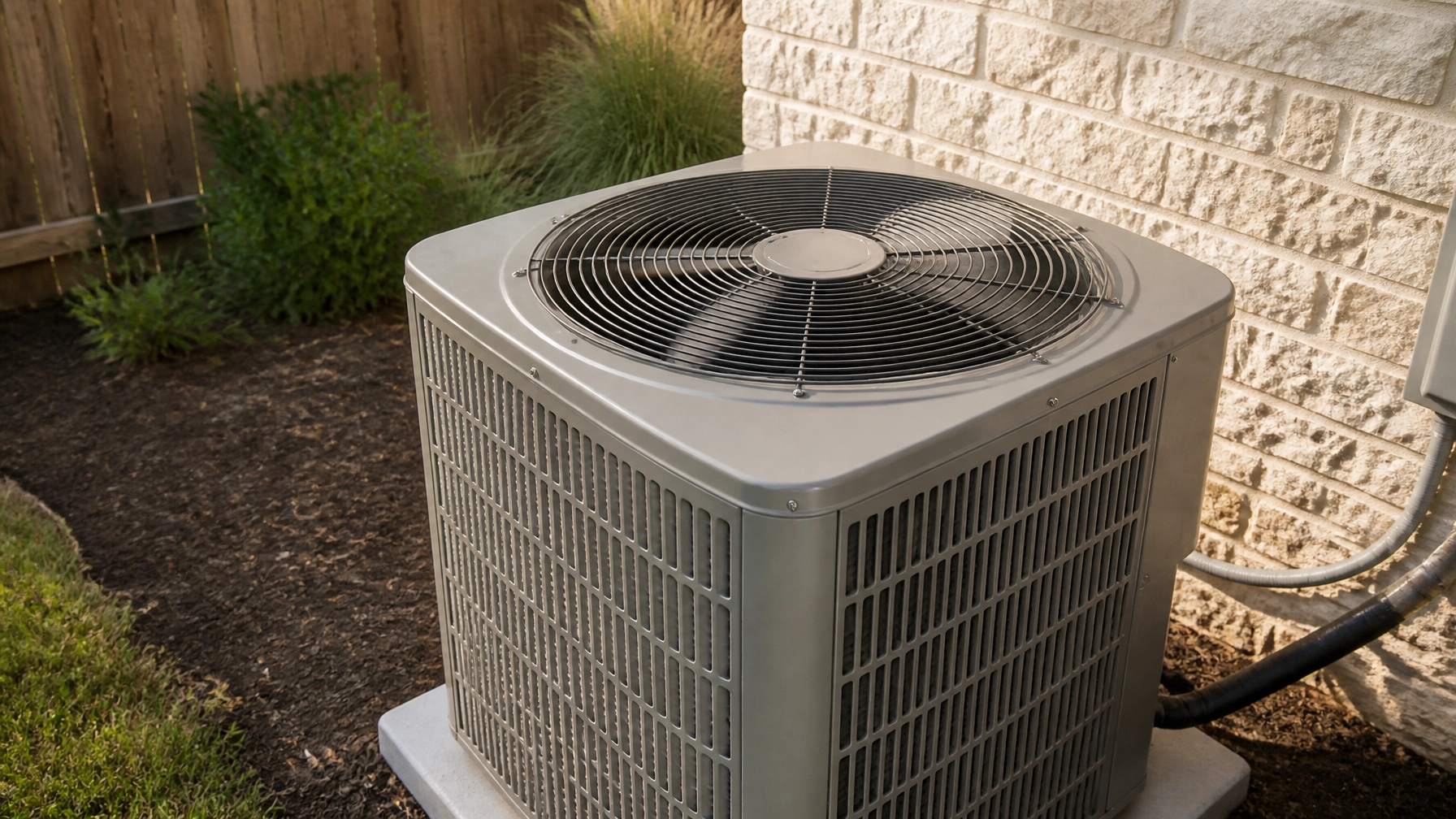
On a hot Central Texas afternoon, your air conditioner is constantly moving heat out of your home. One of the most important parts helping it do that work is also one of the easiest to overlook: the condenser fan motor.
This motor powers the fan on top of your outdoor AC unit. When it runs properly, it helps your system release heat, maintain the right refrigerant pressures, and keep your home cool. When it fails, your air conditioner can quickly lose cooling capacity: and continued operation may put the compressor at risk.
As we head into fall in Austin and the surrounding areas, it’s a smart time to understand this component. A condenser fan motor issue discovered during a seasonal checkup is much easier to address than one that appears during next summer’s first major heat wave.
What Is a Condenser Fan Motor?
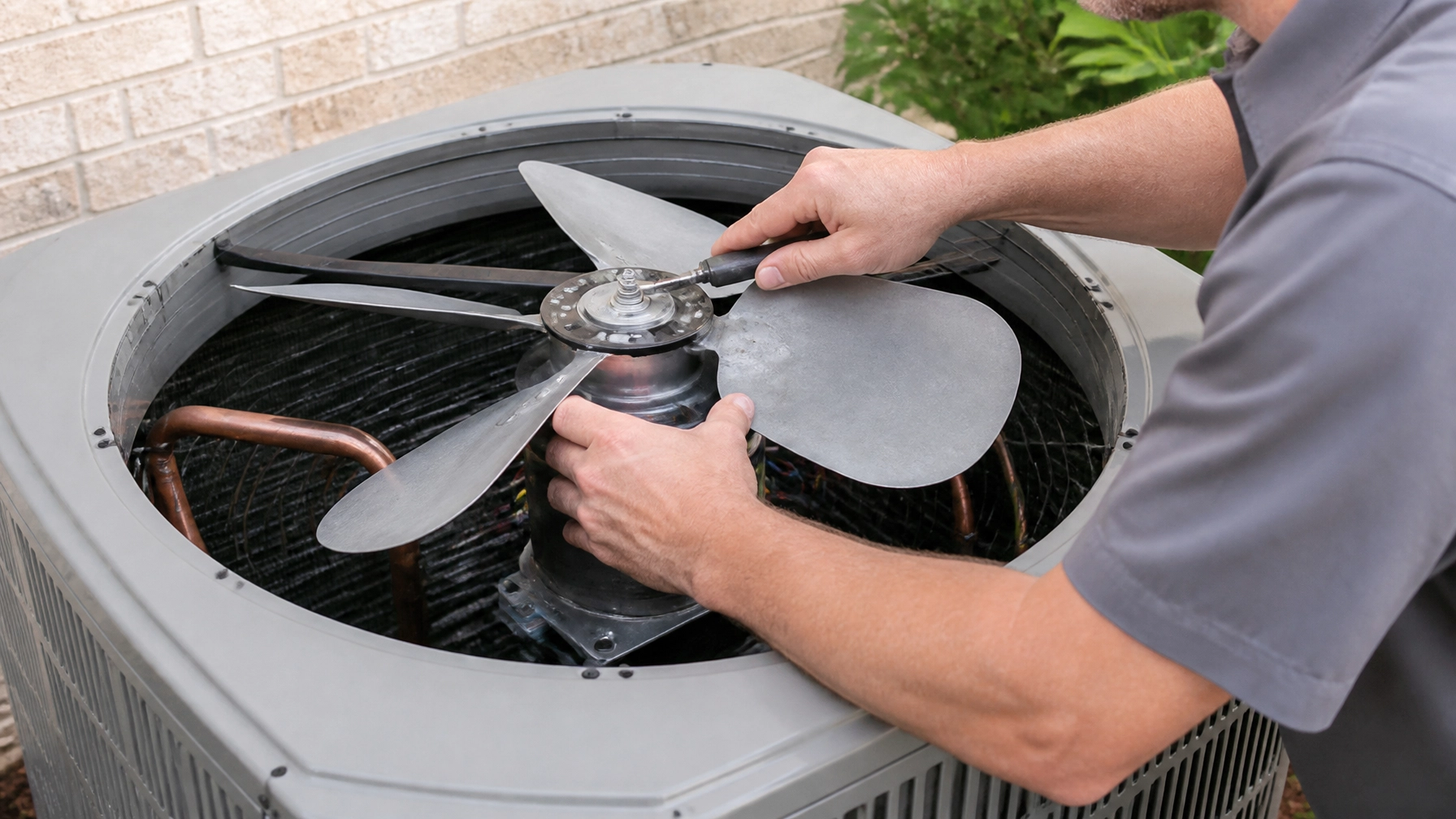
A condenser fan motor is the electric motor inside your outdoor air conditioning unit that spins the large fan blade mounted under the top grille.
The outdoor unit, also called the condenser, contains several important components, including:
- The compressor
- The condenser coil
- The condenser fan blade
- The condenser fan motor
- Electrical components such as capacitors, contactors, and wiring
The motor’s job is simple to describe: it spins the outdoor fan. But the work that fan performs is essential to the entire cooling process.
What Does the Condenser Fan Motor Do?
Your indoor equipment absorbs heat from inside your home. The refrigerant carries that heat through the system and eventually brings it to the outdoor condenser coil.
The condenser fan motor then powers the fan, which pulls outdoor air across the condenser coil. That moving air carries heat away from the refrigerant and releases it into the outside air.
This process allows the refrigerant to change from a hot, high-pressure gas into a liquid so it can return indoors and absorb more heat. In simple terms:
- The indoor coil absorbs heat from your home.
- The refrigerant carries that heat to the outdoor unit.
- The compressor increases the refrigerant’s pressure and temperature.
- The condenser fan moves air across the outdoor coil.
- Heat leaves the refrigerant and moves into the outdoor air.
- The refrigerant continues through the system to repeat the cycle.
That’s why warm air blowing from the top or sides of your outdoor AC unit when cooling is usually normal. Your system is removing heat from indoors and releasing it outside.
You can learn more about how the thermostat, indoor unit, and condenser work together in our guide to how the major parts of an HVAC system work together.
Why Is the Condenser Fan Motor So Important?
Without the condenser fan motor, the outdoor coil cannot release heat effectively. As heat builds up, several problems can develop:
- Refrigerant pressures rise
- Cooling performance drops
- The system may shut down on a safety control
- The compressor can overheat
- The circuit breaker may trip
- Continued operation can damage the compressor
The compressor is often one of the most expensive components in an air conditioning system. A failed condenser fan motor is generally a much more manageable repair. That’s why it’s important not to ignore an outdoor fan that has stopped spinning.
If your indoor blower is running but the outdoor fan is not, turn the system off and arrange for a professional diagnosis. Running the AC for an extended period in that condition may turn a normal motor repair into a much more expensive problem.
Two Common Types of Condenser Fan Motors
Single-Speed PSC Motors
Many traditional air conditioners use a PSC motor, which stands for permanent split capacitor motor.
A PSC condenser fan motor typically:
- Runs at one set speed
- Uses an external capacitor to start and operate
- Has a relatively straightforward design
- Is common in older and standard-efficiency systems
If the capacitor begins to fail, the motor may hum, struggle to start, run slowly, or stop altogether. A bad capacitor and a bad motor can produce similar symptoms, so testing is necessary before replacing either part.
Our article on what an AC capacitor does explains why this small electrical component is so important to motor operation.
Variable-Speed ECM Motors
Newer high-efficiency systems may use an ECM, or electronically commutated motor. These motors are electronically controlled and may adjust their speed based on the system’s operating needs.
ECM condenser fan motors can offer several advantages:
- Improved electrical efficiency
- Quieter operation
- Better control of airflow
- More flexibility in high-efficiency equipment
- Reduced energy use compared with many traditional PSC motors
ECM motors are not identical to PSC motors, and they are not always interchangeable. Their controls, wiring, and operating requirements can vary by equipment manufacturer and model. If an ECM motor fails, the correct replacement must match the system’s specifications.
The U.S. Department of Energy’s Building America Solution Center provides additional technical information about ECM fan motors and their efficiency.
Common Signs of a Failing Condenser Fan Motor
A condenser fan motor may fail gradually or stop working suddenly. Watch for these warning signs.
1. The Outdoor Fan Is Not Spinning
If your thermostat is calling for cooling and the outdoor unit is running, the condenser fan should normally be turning. A stationary fan may indicate a failed motor, capacitor, contactor, wiring problem, or another electrical issue.
Do not reach into the unit or attempt to push-start the blade. There are dangerous electrical components inside the condenser, even when the fan is not moving.
2. Humming, Grinding, or Rattling
Unusual sounds can indicate that the motor is struggling or that its bearings are wearing out. Common warning sounds include:
- Humming without normal fan operation
- Grinding
- Rattling
- Squealing
- Scraping
- A fan that starts slowly or unevenly
A little operating noise from an outdoor unit is normal. A new or worsening sound is worth investigating.
3. Warm Air From the Vents
If the indoor blower is running but the air coming from your vents is warm, the outdoor unit may not be removing heat properly. A failed condenser fan motor is one possible cause, although refrigerant, compressor, airflow, and control issues can create similar symptoms.
4. Short-Cycling
Short-cycling occurs when the system starts and stops repeatedly without completing a normal cooling cycle. A condenser fan problem can cause high temperatures or pressures that trigger a safety shutdown.
Short-cycling should not be ignored. It can increase wear on the system and may prevent your home from cooling properly.
5. A Tripped Breaker
A failing motor may draw excessive electrical current, especially if it is overheating or experiencing internal damage. This can trip the outdoor unit’s breaker.
A breaker that trips once may have a number of explanations. If it trips again after being reset, leave the system off and contact a qualified HVAC professional. Our guide to why an HVAC breaker may trip covers why repeatedly resetting it is not a good solution.
6. High Head Pressure or an Overheating Outdoor Unit
“Head pressure” refers to the pressure on the high side of the refrigeration system. When the condenser fan cannot move enough air across the coil, that pressure can rise beyond the system’s normal operating range.
High head pressure is not something homeowners can accurately diagnose by appearance alone. It requires proper gauges and electrical testing by a trained technician.

What Causes a Condenser Fan Motor to Fail?
Several conditions can shorten the life of a condenser fan motor:
- Age and normal wear: Motors operate through many hot cooling cycles and eventually wear out.
- A failed capacitor: On PSC systems, a weak capacitor can prevent the motor from starting or cause it to overheat.
- Dirty condenser coils: Dust, cottonwood, grass clippings, and other buildup restrict airflow and make the motor and compressor work harder.
- Debris or physical damage: Sticks, leaves, or other objects can interfere with the fan blade.
- Power surges: Electrical disturbances can damage motors, controls, or other outdoor components.
- Poor airflow around the unit: Plants, fences, stored items, or other obstructions can make it harder for the condenser to release heat.
Keeping the area around your outdoor unit clear is a useful homeowner maintenance step. Professional maintenance can also identify dirty coils, loose electrical connections, worn components, and abnormal operating pressures before they become larger problems. Find out how rodents and other pests can affect your condenser fan assembly here.
Is It Better to Repair or Replace the AC?
A failed condenser fan motor does not automatically mean you need a new air conditioner.
In many cases, replacing the motor: or replacing a failed capacitor that is preventing the motor from running: is a normal HVAC repair. Whether repair makes sense depends on factors such as:
- The age of your system
- The condition of the compressor and other major components
- The availability of the correct replacement motor
- The system’s refrigerant and efficiency
- Your repair history
- Your plans for the property
For a newer or well-maintained system, a motor replacement may restore reliable cooling for years. For an older system with repeated major failures, replacement may be worth discussing: but it should be a decision based on the full picture, not pressure to buy new equipment.
At Accu-Temp, we explain what we find, outline the available options, and help you make an informed decision. We do not recommend unnecessary repairs or replacement.
If your AC is showing multiple age-related warning signs, our guide to evaluating a 10-year-old HVAC system can help you think through the repair-versus-replace question.
Why Fall Is a Good Time to Check Your Outdoor Unit
Central Texas cooling systems work hard for much of the year. By late August, a condenser fan motor may have already endured months of high temperatures, long run times, dust, and debris.
Scheduling service before the next cooling season gives you time to:
- Address small problems before they become emergencies
- Check the condition of the fan motor and capacitor
- Clean the condenser coil
- Review system performance
- Plan for a repair or replacement if needed
- Avoid competing with the first major summer rush
Even though temperatures may begin to moderate in the fall, your system still needs to be ready for warm days that can continue well into the season.
The Bottom Line
The condenser fan motor may be a small part of your outdoor AC unit, but it performs a job your entire cooling system depends on. By moving air across the condenser coil, it helps release indoor heat, control refrigerant pressure, protect the compressor, and keep your home comfortable.
If the fan is not spinning, the outdoor unit is making unusual noises, your AC is blowing warm air, or the breaker keeps tripping, turn the system off and arrange for a professional diagnosis.
Whether the solution is a capacitor, a condenser fan motor, cleaning, wiring repair, or a larger system conversation, Accu-Temp Air Conditioning & Heating will give you clear information and honest options. Contact our team for straightforward HVAC service in Austin and the surrounding Central Texas communities.