
The Unsung Hero: Why Your AC Might Need a Condensate Pump
If you live in Central Texas, you know that our air conditioners aren’t just a luxury: they are a survival tool. When the July sun is beating down on Austin or Round Rock, your AC is working overtime to keep your living room feeling like an oasis. But have you ever stopped to wonder where all that humidity goes?
When your AC cools the air, it also removes a staggering amount of moisture. On a humid day, a standard residential system can pull gallons of water out of the air. Usually, that water just trickles down a drain line thanks to good old-fashioned gravity. But sometimes, gravity needs a little help. That’s where the condensate pump comes in.
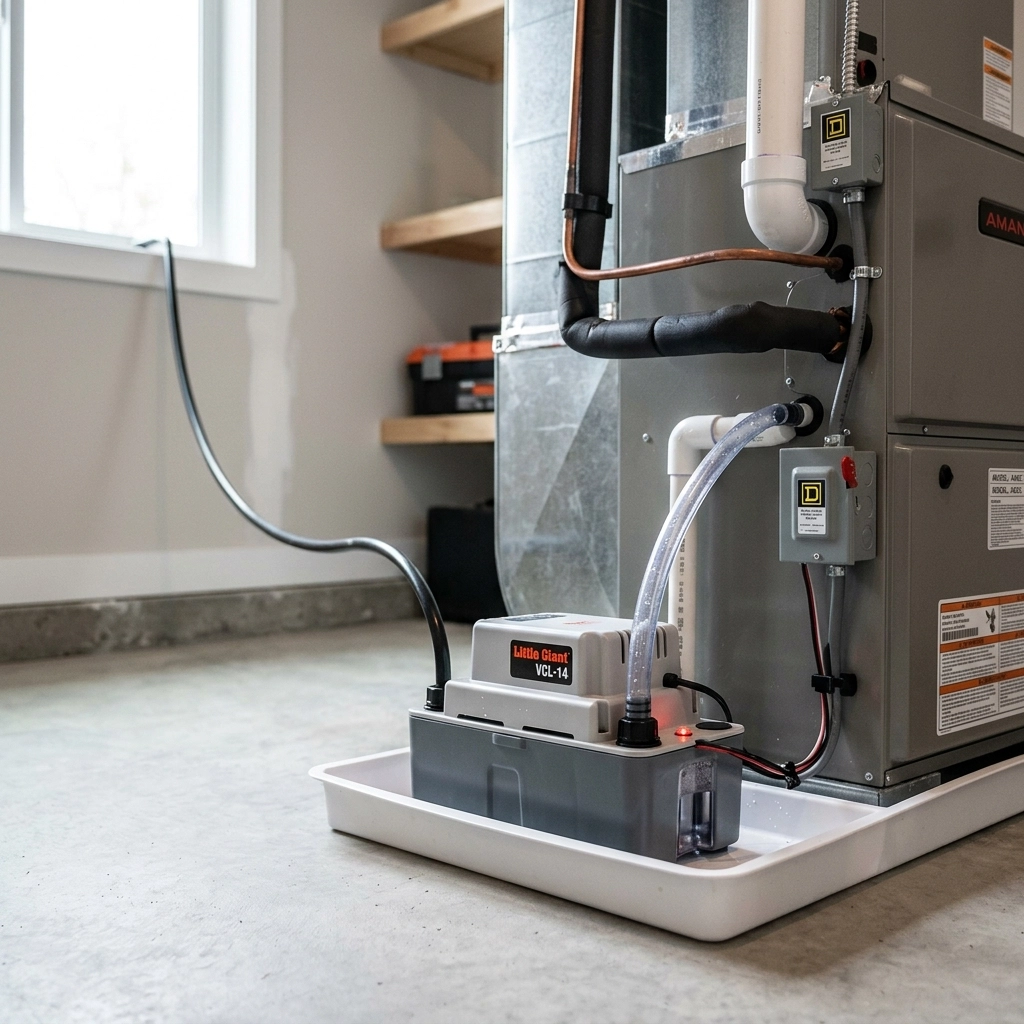
At Accu-Temp Air Conditioning & Heating, we see a lot of different home layouts. Not every house is built in a way that allows for a perfect “downhill” slope for your drain lines. If you’ve ever wondered why there’s a small plastic box humming next to your furnace or hidden inside your wall, this post is for you.
What Exactly is Condensate?
Before we talk about the pump, let’s talk about the “stuff” it’s pumping. Inside your indoor unit (whether it’s in the attic, a closet, or on the wall), there is an evaporator coil. As warm air from your home passes over this cold coil, moisture in the air turns into liquid water. It’s exactly like the “sweat” that forms on the outside of a cold glass of sweet tea on a porch in August.
This water (condensate) drips into a pan and then exits through a PVC pipe. In a perfect world, that pipe slopes downward all the way to the outside of your house or into a floor drain. But as we know, the world isn’t always perfect.
The Gravity Problem: When “Downhill” Isn’t an Option
In many Central Texas homes, the HVAC system is located in a spot where the drain line can’t just run straight down. Here are a few scenarios where gravity fails us:
- Basement or Below-Grade Units: Some older homes or split-level builds have units located below the main sewer line or the outdoor ground level.
- Long Horizontal Runs: Say your unit is in a central closet and the nearest exterior wall is 40 feet away. Maintaining a consistent downward slope for that entire distance can be impossible without hitting floor joists or other obstacles.
- Ductless Mini-Splits on Interior Walls: This is a big one! Mini splits are fantastic for cooling specific rooms or additions. However, sometimes you need to mount one on an interior wall. There’s no easy way to run a drain line through the studs and out the back. For a better understanding of mini split systems, read our blog here.
When the water has nowhere to go, it sits. And when it sits, it overflows. This is where the condensate pump steps in to save your drywall, your floors, and your sanity.


How the Pump Works Its Magic
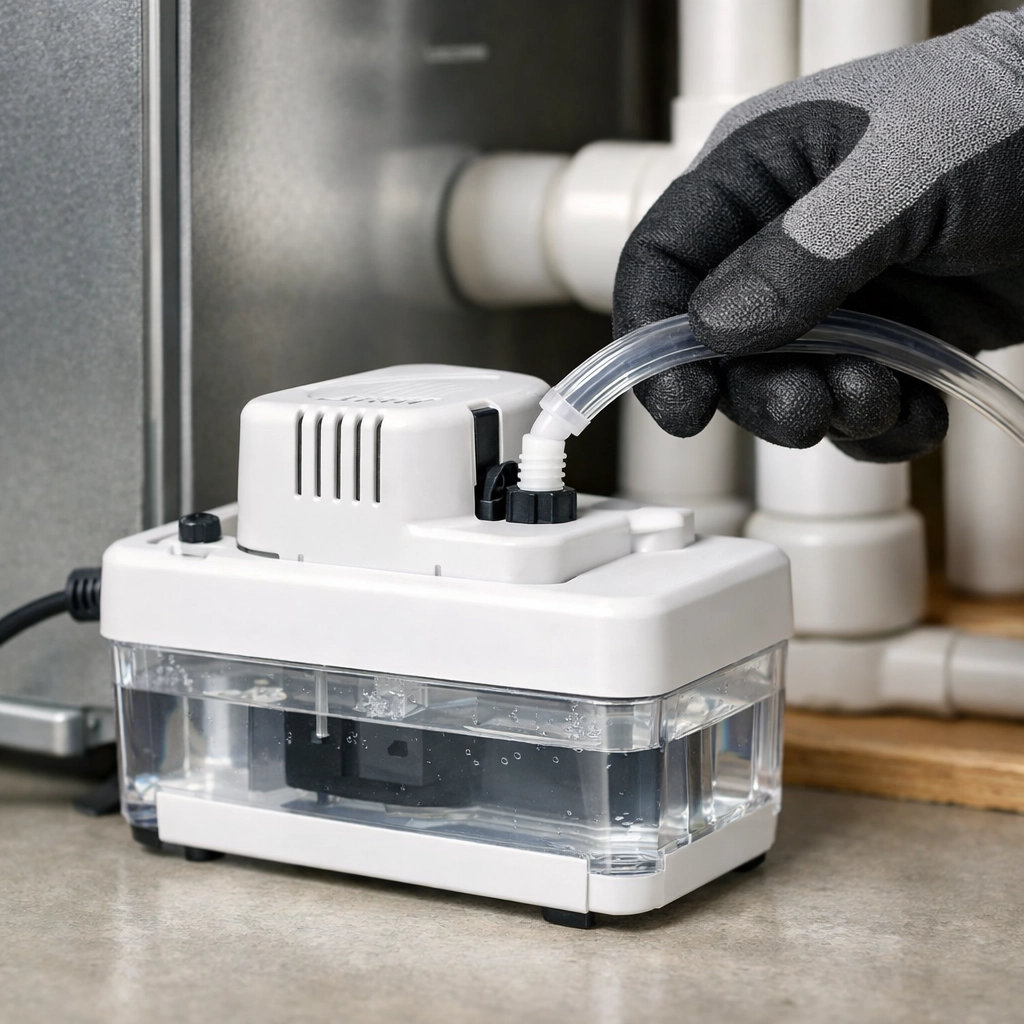
A condensate pump is a relatively simple but vital piece of machinery. It consists of three main parts: a small reservoir tank, a float switch, and a motor.
- The Collection: The water from your AC drips into the pump’s tank.
- The Trigger: Once the water reaches a certain level, the float switch rises (just like the one in your toilet tank).
- The Discharge: The switch triggers the motor, which pumps the water through a small flexible tube. This tube can go up, over, and across, literally anywhere it needs to: to reach a proper drainage point.
By using mechanical force, we can “push” the water up into an attic or across a ceiling to get it out of the house. It’s a literal lifesaver for homeowners with tricky floor plans. If you’re curious about different types of setups, check out our split HVAC system page to see how these configurations work.
Central Systems vs. Mini-Splits
The type of pump you need depends on what kind of AC you have.
For Central Ducted Systems:
These pumps are usually about the size of a shoebox and sit on the floor next to your furnace or air handler. They are powerful and can move a lot of water quickly. They often come with a “safety switch” (more on that in a second) that can shut your whole AC off if the pump fails, preventing a flood.
For Ductless Mini-Splits:
Because mini splits are designed to look sleek and stay out of the way, the pumps have to be tiny. We often use “micro-pumps” that are small enough to be hidden behind the indoor unit or inside the decorative plastic “line-hide” on the wall. They are much quieter but still pack enough punch to lift water several feet. Learn more about mini split systems here.
The “Safety Switch”: Your Flood Insurance
One of the best things about a modern condensate pump is the built-in safety overflow switch. If the pump loses power, or if the discharge line gets kinked, the water in the reservoir will continue to rise.
Before it spills over onto your carpet or through your ceiling, the safety switch sends a signal to your thermostat or control board to shut the cooling system down. If you ever wake up and your AC isn’t running, but your thermostat looks fine, a clogged or failed condensate pump is one of the first things our technicians check. It’s a lot better to be a little warm for a few hours than to deal with thousands of dollars in water damage! Learn about using a condensate safety switch to prevent water damage from a full drain pan here.
Maintenance: Keeping the “Sludge” Away
Because a condensate pump deals with water, it is prone to the same issues as any other plumbing fixture. Over time, dust, pollen, and bacteria can mix with the water to create a “slime” or “algae” inside the tank.
If this sludge builds up:
- The float switch can get stuck in the “off” or “on” position.
- The motor can burn out trying to pump thick gunk.
- The discharge line can become completely blocked.
What can you do?
During the cooling season, it’s a good idea to take a look at the pump reservoir. If the water looks cloudy or green, it needs a cleaning. A simple solution of water and a tiny bit of white vinegar can help break down that slime. However, be careful not to damage the delicate float mechanism.
Regular maintenance is the best way to avoid these headaches. When we come out for a maintenance visit, we don’t just check your refrigerant levels; we inspect the pump, clear the lines, and ensure the safety switches are responsive.
Signs Your Pump Needs Attention
Keep your ears and eyes open for these warning signs:
- New Noises: If your pump starts making a loud grinding or vibrating sound, the motor might be on its last legs.
- Water Stains: If you see moisture around the base of your unit or on the wall near your mini split, the pump isn’t doing its job.
- The AC Won’t Turn On: As mentioned, if the safety switch is triggered, your system won’t run until the water level in the pump is lowered.
- Musty Odors: Standing water in a dirty pump tank can start to smell like a damp locker room, which then gets circulated through your home. This is often linked to poor indoor air quality: you can read more about how we tackle allergies and odors here.
Trust the Pros at Accu-Temp
At Accu-Temp Air Conditioning & Heating, we believe in honest pricing and clear communication. If your home requires a condensate pump, we’ll make sure it’s installed correctly, sized right for your system, and maintained to last.
Whether you’re dealing with a leaky unit or you’re looking to install a new system replacement that requires a tricky drainage solution, we’ve got your back. We love helping our neighbors in Austin and the surrounding areas stay cool and dry.

Don’t let a small drainage issue turn into a giant home repair project. If you’re worried about your AC’s drainage or haven’t had your pump checked in a while, give us a shout! You can contact us here to schedule a visit. We’ll make sure your “unsung hero” is ready for the next Texas heatwave.