
Surge Protection: Why a Texas Storm Could Kill Your AC Electronics
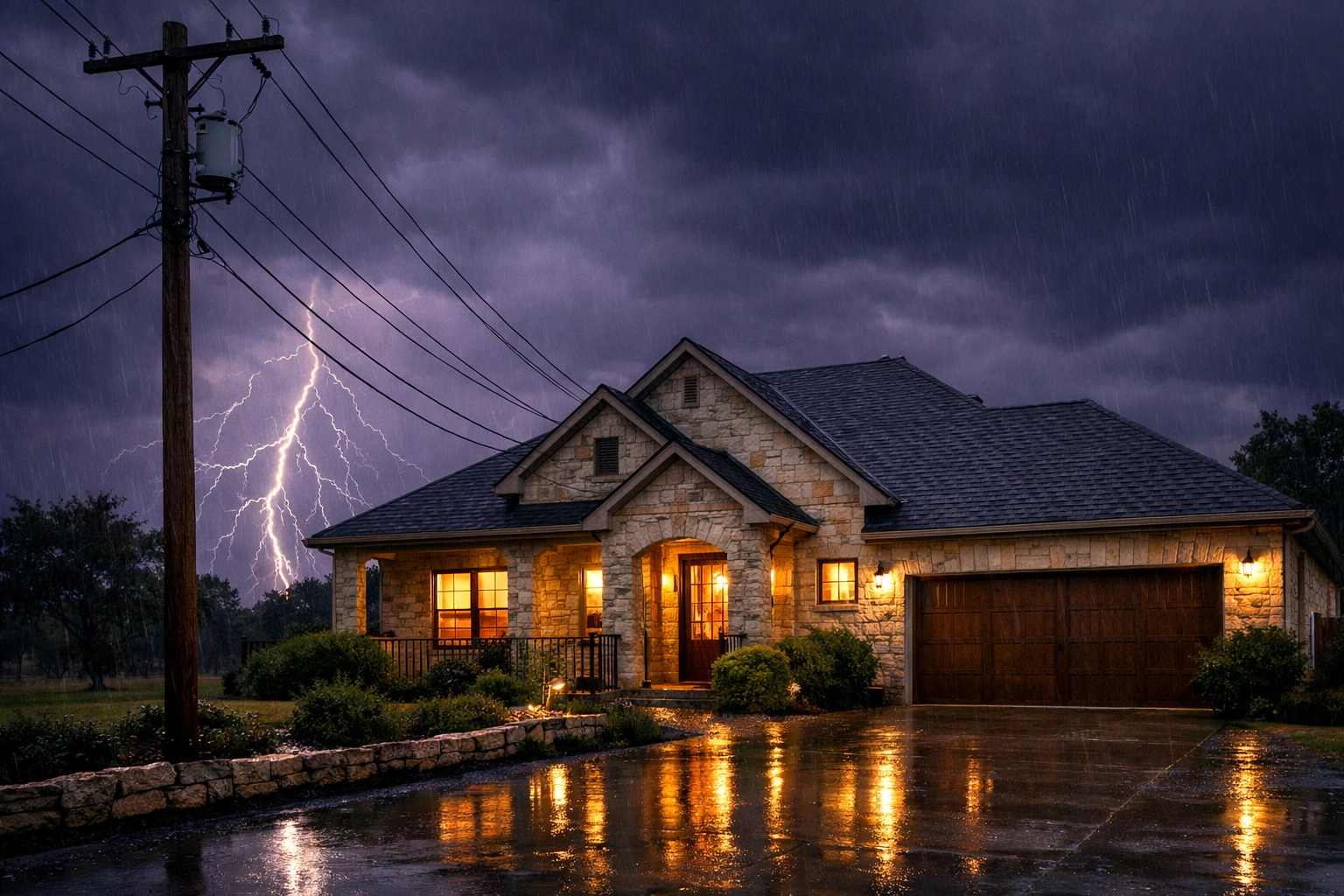
If you’ve lived in Central Texas for more than five minutes, you know that our weather has a bit of a personality disorder. We can go from a beautiful, morning to a “sky-is-turning-green” thunderstorm by 4:00 PM. We love a Texas sunset, but we aren’t huge fans of what those lightning-filled spring storms do to your air conditioning system.
As the weather heats up and the humidity starts to settle in over Austin, your AC is going to be working overtime. But while you’re inside enjoying Netflix and a cold drink during a thunderstorm, your outdoor unit is sitting out there in the elements, completely exposed to the electric chaos of a Texas spring.
Today, I want to talk about something that isn’t exactly “sexy” in the world of home improvement, but it’s probably the single most cost-effective way to protect your home’s biggest investment: Surge Protection.
The Modern AC: It’s Not Just a Fan and a Box of Ice Anymore
Back in the day, air conditioners were pretty simple. They had a motor, a compressor, and some copper coils. They were built like tanks and could take a beating. But those days are long gone. Today’s high-efficiency systems, the kind that keep your Austin Energy or PEC bills from skyrocketing, are essentially giant computers that live in metal boxes in your backyard.
These modern units are packed with sensitive microprocessors, circuit boards, and integrated electronics. They use these “brains” to communicate with your Honeywell Smart Thermostat, modulate the fan speed, and ensure your home stays at exactly 72 degrees with maximum efficiency.


The problem? Electronics are delicate. You wouldn’t plug your $2,000 MacBook Pro directly into a wall outlet during a lightning storm without a surge protector. Why would you leave your $10,000+ HVAC system unprotected?
The Anatomy of a Texas Power Surge
When we talk about power surges in Central Texas, most people immediately think of a direct lightning strike. While that’s definitely the “worst-case scenario” (and can literally melt components), it’s not actually the most common way your AC gets fried.
1. The “Big One” (Lightning)
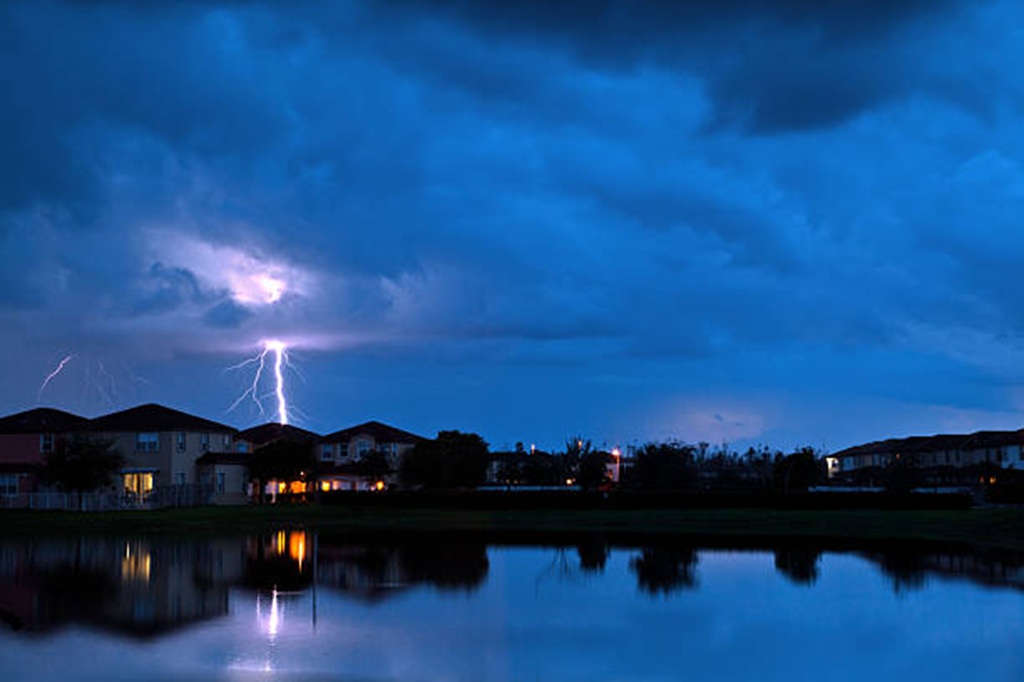
Lightning doesn’t have to hit your house to cause a problem. A strike on a nearby transformer or power line can send a massive wave of high-voltage electricity racing through the grid and right into your home’s wiring. When that surge hits your AC unit, it’s like trying to pour a gallon of water through a straw in half a second. Something is going to burst, and usually, it’s the control board.
2. The “Grid Wobble”
During our legendary spring storms, power lines often sway, touch, or get hit by falling branches. This causes the power to flicker or go out entirely. When the power comes back on, even if it’s just for a split second, there is often a “rebound” surge that hits your appliances with way more juice than they were designed to handle.
3. The “Silent Killer” (Internal Surges)
Believe it or not, about 60% to 80% of power surges actually come from inside your own home. Every time a large appliance like your refrigerator or your split HVAC system cycles on or off, it creates a mini-spike in voltage. Over time, these thousands of tiny “micro-surges” degrade the sensitive electronics in your AC, leading to premature failure.
Why Your AC is a “Surge Magnet”
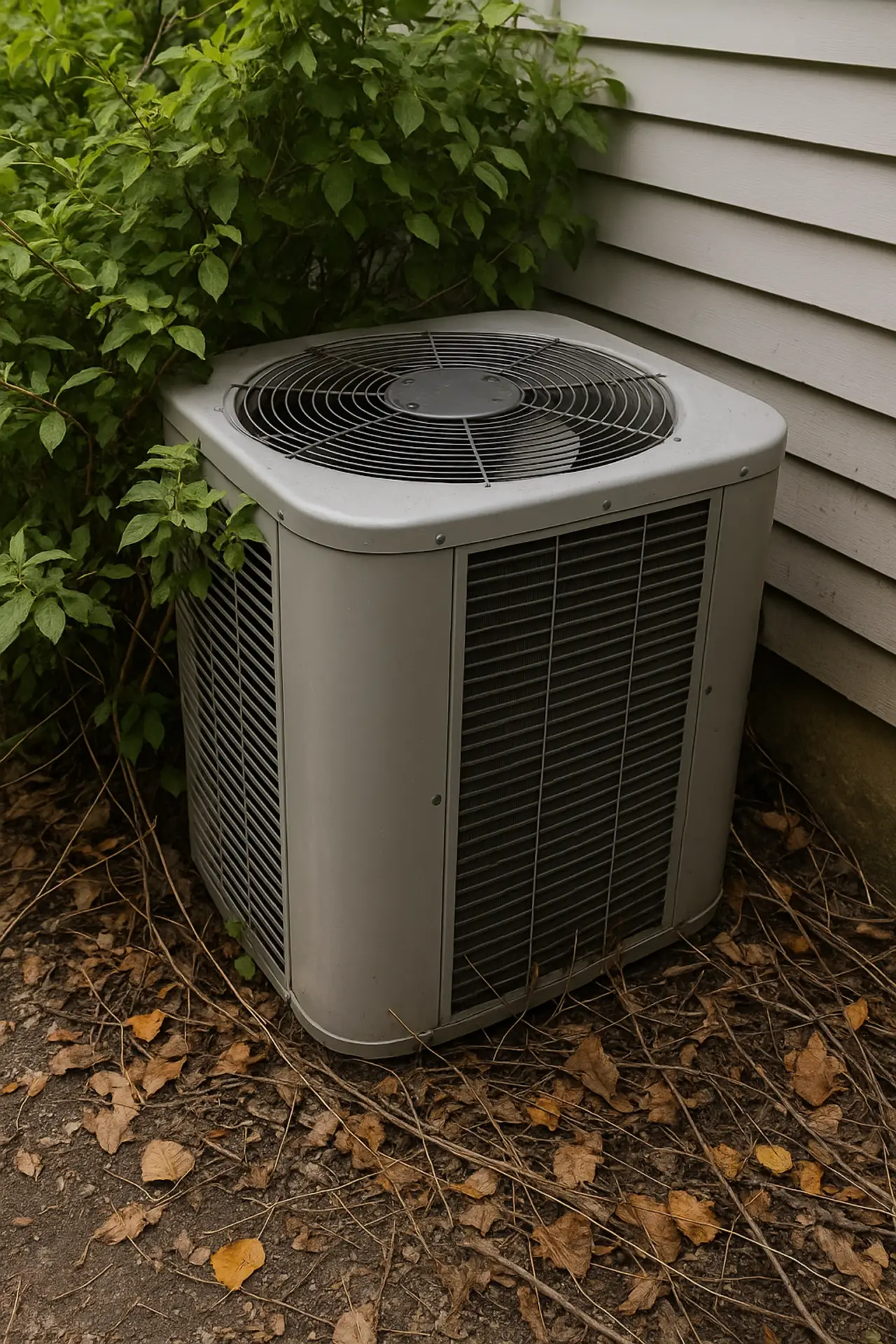
Your AC unit is particularly vulnerable for a few reasons. First, it’s connected to both your home’s high-voltage electrical system and the low-voltage thermostat wiring. This gives a surge two different paths to enter the system. Second, the outdoor condenser is literally a metal object sitting on the ground, often the highest point of “machinery” near your house’s foundation.
When a surge hits, the first thing to go is usually the control board. If you’re lucky, a fuse might blow. If you’re unlucky, the surge travels straight to the compressor, the “heart” of your system. Replacing a compressor is one of the most expensive services we offer. In many cases, it makes more sense to replace the entire unit once the compressor is toast.
The Financial Reality: An Ounce of Prevention
I’m a big believer in giving our customers the facts and letting them make the best decision for their families. At Accu-Temp, we don’t do high-pressure sales. We’re about honest pricing and long-term relationships.
So, let’s look at the math:
- A high-quality HVAC surge protector: Usually costs a few hundred dollars, including professional installation from a licensed electrician.
- A fried control board repair: Can easily cost $600 to $1,200 depending on the model.
- A fried compressor repair: Can range from $2,500 to $5,000+ with refrigerant, if needed.
- A full system replacement: Well, you can expect quotes for $8,000 – $18,000.
It’s one of the few things in the HVAC world that truly pays for itself the very first time a storm rolls through your neighborhood. It’s like insurance, except instead of just paying you back after the disaster, it actually prevents the disaster from happening in the first place.
What Does a Surge Protector Actually Do?
Think of a surge protector as a very fast, very strong “bouncer” for your AC unit. Under normal conditions, it just stands there and lets the electricity flow through to the unit. But the moment it detects a voltage spike that exceeds a safe limit, it instantly diverts that excess energy away from your AC and safely into the ground.
It reacts in nanoseconds: way faster than a standard circuit breaker could ever move. While a breaker is designed to protect your house from catching fire, a surge protector is designed to protect the “brains” of your appliances from being scrambled.
Think you are dealing with a tripped breaker? Read more about what to do here.
The Accu-Temp Way: No Gimmicks, Just Protection
When we come out for a maintenance visit or a repair, we look at the equipment health. If you have a modern, high-efficiency unit without any surge protection, feel free to ask for advice. Not because we want to “upsell” you, but because we’ve seen too many heartbreaking situations where a perfectly good three-year-old system was killed by a single lightning strike over by the Domain or out in Round Rock.
We pride ourselves on being the guys you can trust. If your system is old and probably doesn’t need it, we’ll tell you. But if you’ve got a newer unit, protecting those electronics is just common sense. We recommend heavy-duty, industrial-grade surge protectors specifically designed for HVAC equipment: not the flimsy power strips you buy at the big-box stores for your toaster.

Don’t Wait for the “Boom”
We are currently right in the thick of Texas storm season. If you’ve been hearing the thunder rattling your windows lately, take a second to think about that AC unit sitting outside. Is it protected?
If you aren’t sure, or if you want to get a professional opinion on how to “hardline” your system against the next Central Texas weather tantrum, give us a shout or consult your favorite electrician. You can check out our news and insights for more tips, or just contact us to have a technician swing by.
We’ll give you the straight talk, show you your options, and help you keep your cool: no matter what the Texas sky decides to throw at us next.
Stay safe, stay cool, and maybe unplug the expensive stuff when the clouds turn that weird shade of green!