
The “Low Freon” Myth: Why Your AC Needs a Diagnosis, Not Just a Top-Off
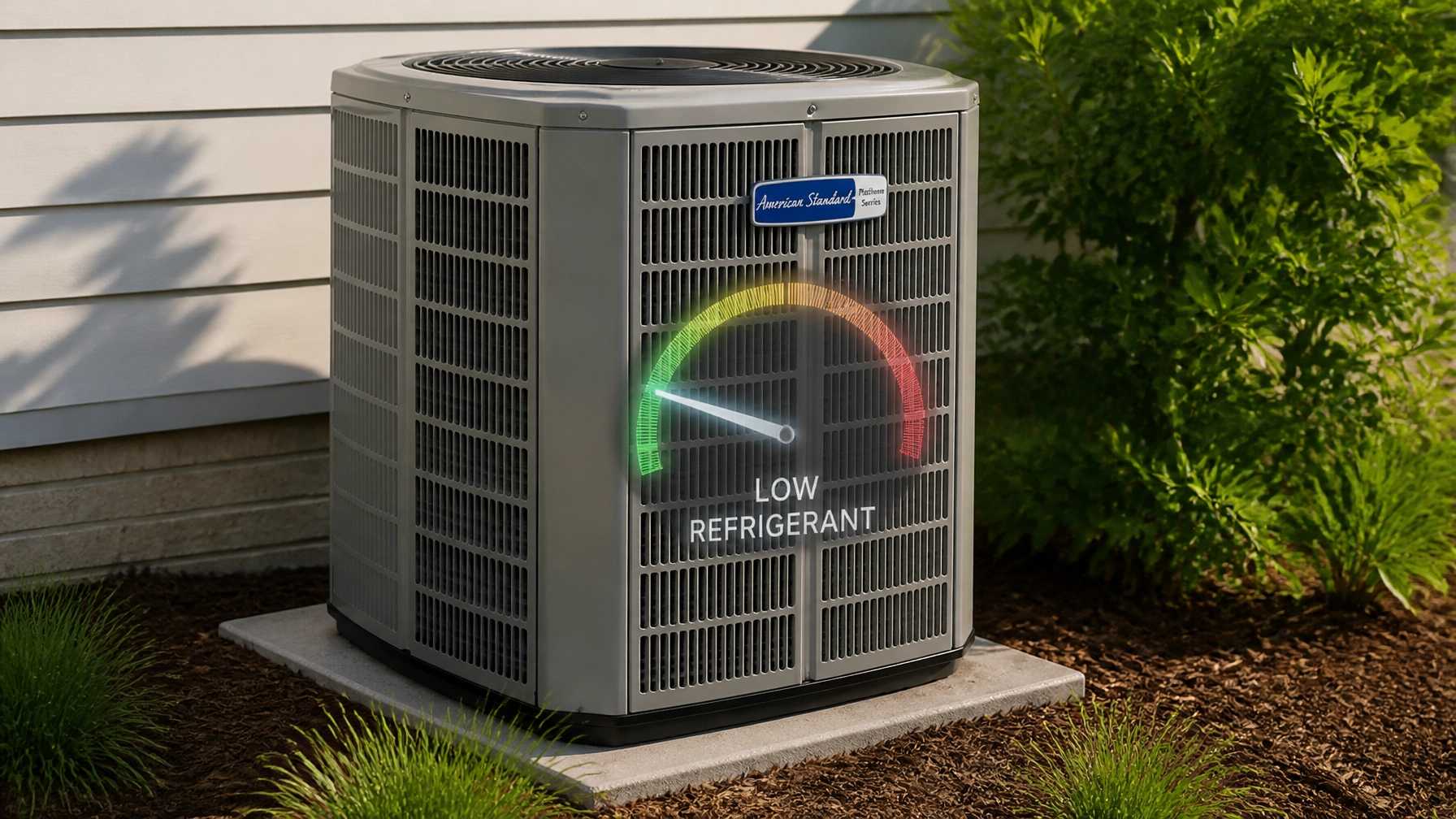
If you live in Central Texas, you know the drill. It’s 4 PM on a Tuesday in July, the humidity is thick enough to chew on, and suddenly, you realize the air coming out of your vents feels… lukewarm. Your first instinct? You probably pick up the phone and tell the HVAC company, “Hey, I think I just need some more Freon.”
It’s the most common phrase we hear at Accu-Temp Air Conditioning & Heating. It sounds simple, right? Like topping off the oil in your car or adding air to a slightly low tire. But here’s the cold, hard truth: If your AC is low on refrigerant, you don’t just need a “top-off.” You have a problem that needs a real diagnosis.
In this post, we’re going to bust the “Low Freon” myth once and for all. We’ll talk about why your AC isn’t like a car when it comes to fuel, what else might be causing your cooling woes, and why simply adding more refrigerant is often like pouring money down a (very expensive) drain.
1. The “Closed System” Reality Check
First things first: let’s clear up how your air conditioner actually works. Many homeowners believe that an AC “uses up” refrigerant the way a car uses gasoline. If the tank is low, you just fill it back up, right?
Wrong.
Your air conditioning system is a closed-loop system. The refrigerant (often called Freon, though that’s actually a brand name) is a working fluid that constantly cycles between your indoor and outdoor units. It changes from a liquid to a gas and back again, absorbing heat from inside your home and dumping it outside.
Under normal, healthy conditions, the refrigerant never leaves the system. It isn’t consumed, it doesn’t “evaporate” into thin air, and it doesn’t get “tired.” If your system is low on refrigerant, there is only one reason: there is a hole somewhere.
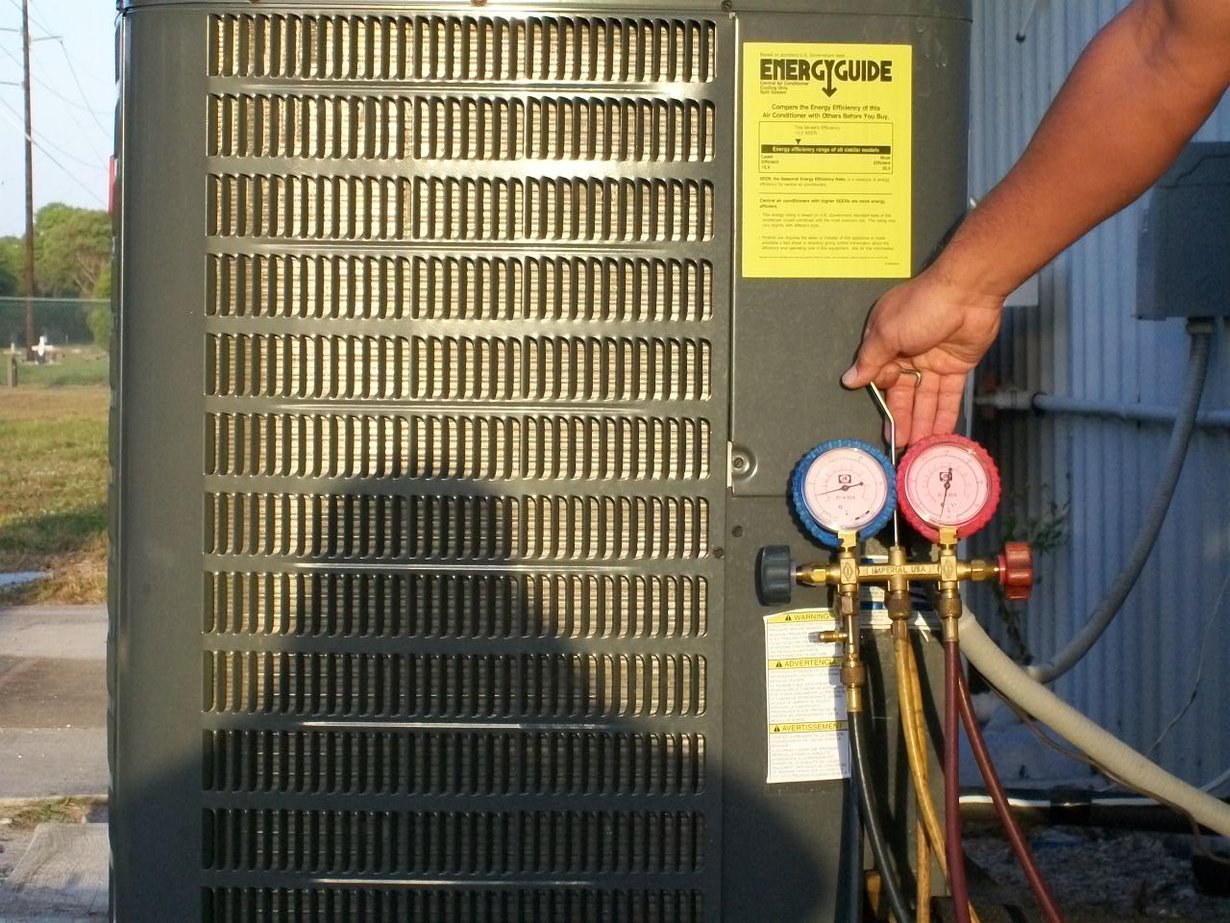

Think of it like a bicycle tire. If the tire is flat, you can pump it back up, but if there’s a nail in the rubber, that air is going to leak right back out. You haven’t fixed the tire; you’ve just delayed the inevitable. In the HVAC world, “topping off” without fixing the leak is exactly the same thing: except refrigerant is a lot more expensive than air.
2. Why “Topping Off” is a Bad Investment
We get it. You’re hot, you want comfort now, and a quick recharge seems like the fastest, cheapest fix. But as an honest HVAC partner, we have to tell you: it’s usually a waste of your hard-earned money. Here is why:
The Cost of Refrigerant is Skyrocketing
If your system still uses R-22 (the old stuff), you already know it’s wildly expensive because it’s no longer being produced. But even the “newer” R-410A is seeing price hikes due to federal phase-outs. If you’re interested in how this affects you, check out our deep dive on the R-410A Phase-Out. When you “top off” a leaking system, you are paying for a chemical that is literally escaping into the atmosphere as soon as the technician leaves.
Environmental Impact
Refrigerants are powerful greenhouse gases. Intentionally adding refrigerant to a system you know is leaking isn’t just bad for your wallet; it’s bad for the planet.
Potential Compressor Damage
Your system is designed to run with a very specific amount of refrigerant. When the levels are low, your compressor (the “heart” of your AC) has to work much harder to move heat. This leads to overheating and, eventually, a total system failure. A “top-off” might make the air feel cooler for a few days, but the underlying strain on your compressor continues until the leak is fixed.
3. The Diagnostic Laundry List: It Might Not Be the Freon!
Often, when a customer is convinced they need “Freon,” the problem is actually something else entirely. This is why a professional diagnosis is non-negotiable. At Accu-Temp, we don’t just take your word for it: we dig in to find the root cause.
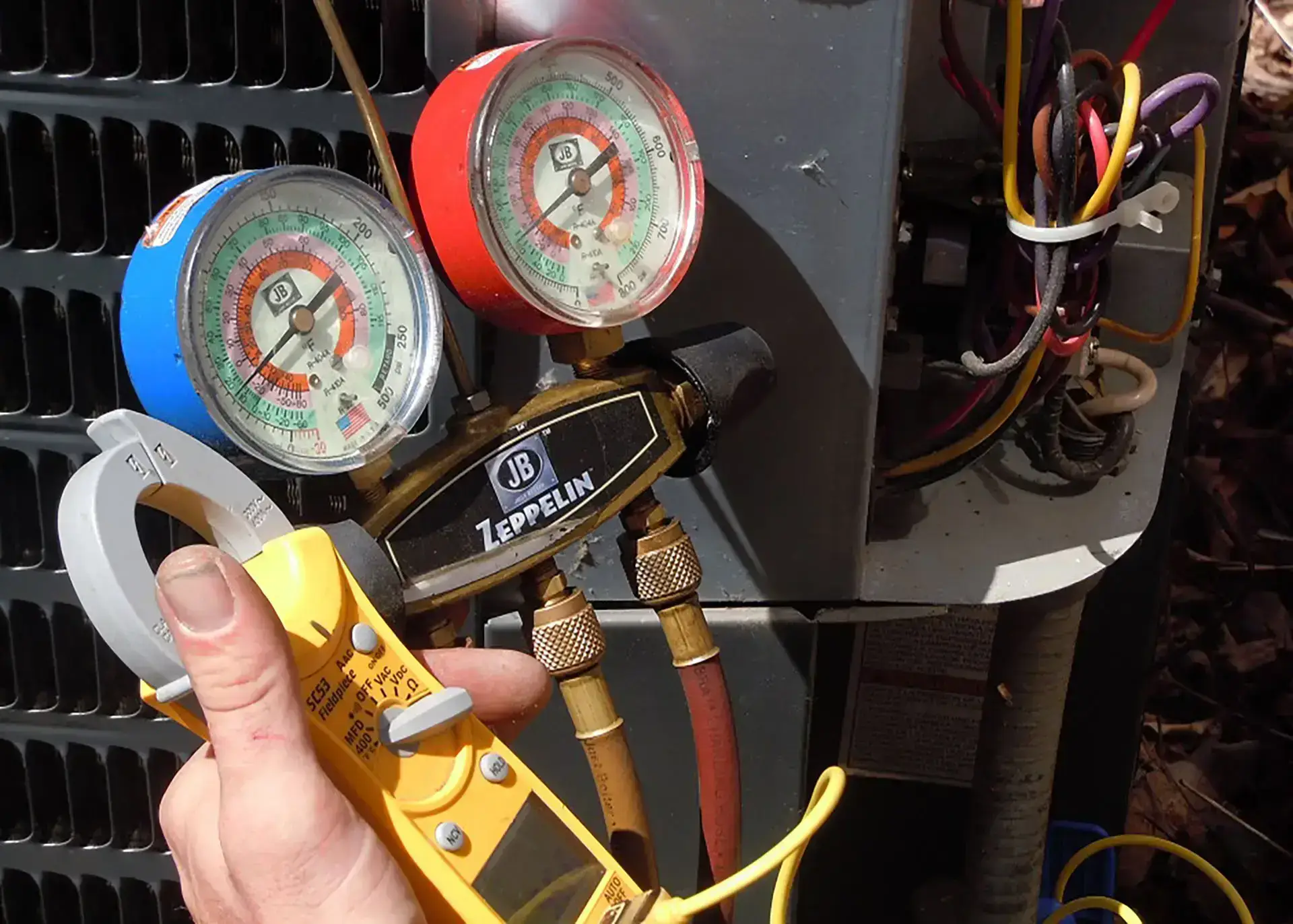
Here are just a few of the common culprits that can mimic a “low refrigerant” situation:
- A Failed Capacitor: This small, cylindrical part provides the “jolt” needed to start your motors. If it dies, your outdoor fan or compressor won’t run, leaving you with nothing but warm air. If you are looking for more information about capacitors, read our post here.
- Clogged Drain Lines: If your AC’s condensate drain line gets backed up with algae or debris, a safety switch will often shut the whole system down to prevent water damage. Read more about condensate safety switches here.
- Dirty Air Filters or Coils: If air can’t move through your system, it can’t cool your house. In fact, a super dirty filter can cause your coils to freeze solid, making it look like you have a refrigerant issue when you actually just need a $10-20 filter. (Check out our 10 Reasons Your AC Isn’t Cooling for more on this!)
- A Tripped Breaker: Sometimes the fix is as simple as a flip of a switch: though if it keeps tripping, you definitely have an electrical issue. Read more about Why Did My AC Trip the Breaker? here.
- Failed Blower Motor or Contactor: Mechanical parts wear out. If the blower motor in your attic isn’t spinning, or the contactor in your outdoor unit is pitted and stuck, you aren’t getting cold air.
- Control Board or Thermostat Issues: Modern HVAC systems are computer controlled. A glitch in the “brain” can stop the cooling process in its tracks. Click here to learn more about thermostat settings.
4. The Accu-Temp Process: Finding the “Why”
When we arrive at your home and suspect a refrigerant issue, we don’t just reach for the tank. We follow a process built on honesty and integrity.
Step 1: The Initial Diagnosis
We check the electrical components, the airflow, and the pressures. If we find that the refrigerant level is indeed low, we inform you immediately.
Step 2: The Leak Check (With Approval)
We don’t just start charging you for more refrigerant. Instead, we recommend a refrigerant leak check. This involves using specialized electronic “sniffers,” UV dyes, or nitrogen pressure tests to find exactly where the gas is escaping. We only move forward with this if you approve it. We want you to have all the information so you can make an informed decision.
Step 3: Repair vs. Replace
Once we find the leak, we give it to you straight:
- Brazing: If the leak is in a copper line or at a connection point, we may be able to “braze” (a high-temperature welding process) the hole shut and seal the system.
- Replacement: If the leak is inside the evaporator coil or the condenser coil: where the metal is thin and prone to multiple “pinhole” leaks: brazing is usually a temporary Band-Aid. In these cases, we’ll recommend replacing the leaking component to ensure a long-term fix.

5. Comfort You Can Count On
At Accu-Temp Air Conditioning & Heating, we aren’t here to upsell you on repairs you don’t need. Our goal is to provide lasting HVAC solutions, not quick fixes that leave you stranded in the Texas heat a week later.
If your AC isn’t cooling, don’t just assume it needs a “top-off.” Let us give you a clear, honest diagnosis so you can stay cool all summer long without the stress of recurring repair bills. We serve homeowners and businesses across Austin and Central Texas with a focus on clear communication and fair pricing.
Is your AC acting up? Don’t fall for the “Low Freon” trap. Give us a call at (512) 636-9555 or visit our Contact Page to schedule your professional diagnosis today!